
On 19 August 1981, the skies were patrolled in the Sidra Gulf off Libya by two F-14 Tomcats — the top US jet fighters. Two Libyan SU-22 fitters are in front of them. The Tomcats are moving to them. But one of the Fitters unexpectedly released an Atoll missile, and it turned the routine interception hot.

These U.S Jets Were Out Patrolling When The Unexpected Happened
Today’s Mission
Nothing is important to them other than to warn the F-14s against the fitters. This is today’s mission: let Libyans know that if they don’t get away, they’re getting towards an area where they face firing. However, an air-to-air missile fires at the leading US aircraft and the US Navy’s top guns in a fight-or-flight scenario.

Today’s Mission
The Swing-Wing Fighters
The Fitters and Tomcats are characterized as swing-wing fighters. And these aircraft types have never been involved in struggle — till today. Moreover, Tomcat never had a dogfight ever before. However, the first difficulty for the Squadron leader is facing an Atoll missile. This struggle may have been finished before it actually began…

The Swing Wing Fighters
The Navigation Exercise
The Tomcats performed a free navigation practice in the Gulf of Sidra. This military action demonstrates the rights of ships and aircraft to maneuver under international law. They protest against claims that other nations deem excessive on global seas. How much the waters in question are “excessive.”

The Navigation Exercise
Sending The Task Force
The U.S. showed Libyans that it was defending the freedom to navigate in the Mediterranean in this instance. It thus deployed a task force including the U.S.S. Nimitz and U.S. Forrestal. Tens of aircraft and helicopters, including the F-14s, came from each carrier.

Sending The Task Force
The F-14
The F-14 was born of the necessity to have an aircraft as the principal protection for a naval group. The Tomcat would scrap and utilize their speed and power if an adversary ordered the bombing to attack the warships to not allow them to close in.

The F 14
Testing The F-14
And it’s been quick! In March 2021, Charlie Brown, test driver, and creator of the F-14 Popular Mechanics’ website, made a statement. “The [Navy] specs called for Mach 2.34 [over twice the speed of sound]. We actually tested the airplane for Mach 2.5 [even faster]. When you fly a Phantom, it’s built for 2.0, but when you fly that fast, it’s like sitting on a beach ball; you don’t know which way it’ll go. It’s so sensitive. In an F-14, it’s like sitting in a Cadillac.”

Testing The F 14
The Slick Beast!
This slick beast with an extensive range and a complete technology bundle could not be somewhat fooled. “The Tomcat was a massive airplane wrapped behind an enormous radar specially built to fire the most lethal air-to-air missile in the western inventory, the AIM-54 Phoenix.” This is the most devastating air-to-air missile in the Western store.

The Slick Beast!
The Star Of The Show
This incredible plane could have attracted the attention of the public. And it became a celebrity when F-14 pilots struck Top-Gun film in 1986. After the film was broadcast, the Navy was flooded with young people who wanted to fly their own Tomcat.

The Star Of The Show
The Rules Of Engagement
However, you required a calm mind with this type of power. You also needed rules of engagement. In August 1981, the fighter pilots were made clear of what they had. They were not at war. Therefore, they weren’t ready to do anything, but they didn’t need the authorization to shoot back if they came under fire.

The Rules Of Engagement
The Naval Aviators
So the naval aviators understood that they would confront powerful and well-armed opponents if things started. The Libyans possessed their own aircraft, such as the Mach 3-capable Foxbat MiG-25, the heavy Su-22 Fitter and the Français, the Mirage 5D, and F.1.

The Naval Aviators
Sukhoi Su-22s
Sukhoi Su-22s were the aircraft that the Tomcats met. These aircraft were intended to maneuver fast, close to the ground. So they indeed weren’t the greatest Tomcats to take on. And they had no radar. They needed to fight a contemporary dogfight. They had no radar. Instead, they had a laser on the front of the earth.

Sukhoi Su 22s
The Unexpected Specs
The Soviet planes were famous worldwide, especially since the sweeping wings only needed a modest takeoff path. They were not beginners, even though the onboard equipment helped the pilot in bombing and navigational work, with a strong engine and a comprehensive electronics package.

The Unexpected Specs
Bomb And Missile Carriers
And the Su-22, which would endanger the battleships, could carry a whole assortment of bombs and missiles of varied sizes. Although the concentration was on bombing, air recognition might also work. It, therefore, made an excellent decision to expand the U.S. task force’s location.

Bomb And Missile Carriers
The MiG-25s
Yet, the Libyans employed a different jet in their initial 1981 attempt at the defense of the U.S. airline operators. Once the training began, they sent in MiG-25s. It wasn’t long until the warships, including F-4J Phantoms and F-14s, were driven out by planes. And it’d just be the beginning.

The MiG 25s
The Day Of August 18, 1981
What were the Libyans doing? Well, the aircraft carriers were they wanted to know. And the plane of the Navy functioned as a screen and warned them of it through the airspace. The Libyans deployed 35 aircraft, pair after pair, on August 18, 1981. And throughout the day, the Americans and they junked over the gulf in the sky.

The Day Of August 18, 1981
The Black Aces
The American ships returned the next day to their air screen. Two tomcats, dubbed “Black Aces” by the VF-41, were included. These aircraft rocked off the Nimitz deck. Due to the F14s’ rhythm and power sported the “Fast Eagle 102, Fast Eagle 107” placards.

The Black Aces
The Uneventful Patrol
In the beginning, their patrol was uneventful. But it’d alter shortly. The guys on the aircraft would be tested to their maximum exercise. The flyers were Henry “Hank” Kleemann – supported by radar specialist Dave Venelet – the Fast Eagle 102 mission commander and Muczynski’s Larry “Music” on the radar with James Anderson.

The Uneventful Patrol
Henry “Hank” Kleemann
Kleemann, an indigenous guy from the large regions of southern Illinois, was a bit hefty at first. But training at the naval academy quickly came to a halt. He possessed smarts to match the physique, brawny and powerful. In quickly becoming straight As before he became a pilot, he earned a reputation for himself.

Henry “Hank” Kleemann
Larry “Music” Muczynski
The natural pilot person was definitely not Muczynski. Only after he entered the Navy, he started. But he has taken it somewhat. He made the switch from Phantoms in 1981. “It was a great bargain to obtain a tomcat,” he told the website of the Museum of Flight in 2018. The plane change resulted in a ship shift, and he loved it, although there was something to want from meals on the Nimitz.

Larry “Music” Muczynski
F-14 A and B Tomcat in Detail and Scale
Muczynski described in detail and in scale what had occurred to Bert Kinzey for his book F-14 A and B Tomcat. The Tomcat pilots were not satisfied to start with. The day prior, their station saw little action. And they didn’t really want to stay there too long. They’ve got a plan thus.

F 14 A And B Tomcat In Detail And Scale
Explanation
Muczynski explained, “In fact, we were trying to think of ways to get off of that station and go someplace else. What we had determined was that once we got down to what we call our combat fuel load, we would call for relief on the station, go back and hit the tanker, and then go to another station.”

Explanation
The Bogey
So the two Tomcats were near to putting their idea into practice three-quarters of an hour in their patrol. But then a bogey was discovered. On his radar, Venlet spotted a blip. They scanned a Libyan airstrip and took something out of it. Anderson got the goal on his screen before long too.

The Bogey
A Scary Interaction
It wasn’t the Libyans hanging around. They came to the Tomcats directly. They ran up to 20000 feet, the height at which the F-14s flew. The Libyan pilots quickly reached 540 knots and mirrored their moves as Kleemann and Muczynski maneuvered. Muczynski knew that his opponents were led by ground control. Fearful things!

A Scary Interaction
Something Unexpected…
American aircraft did not have the means to proceed at their cruising speed quicker than the Libyans. So they did as much as possible with their afterburner. The Tomcats flew at 500 knots shortly. The two planes came progressively closer together when something wasn’t anticipated from the Americans.

Something Unexpected
Is That A Missile?
Muczynski described it, saying, “When Commander Kleemann was 1,000 feet in front of them and about 500 feet above them, he rolled his left wing to pass directly above the section, so he could get a visual ID on them. At that time, the left side of the lead Libyan aircraft lit up with a big flame as the missile motor ignited.”

Is That A Missile
One Scary Moment
Since the plane which fired the missile was next to Muczynski, he had a superior view of what was happening. And the rocket shrank toward his aircraft rather than a closer look. However, the flyer did not blink. As he said, “It was also clear to Kinzey instantly that neither of us would be knocked down by the missile. Therefore either of us did not worry.”

One Scary Moment
Target
But the Libyans had made themselves targets now that they had fired. The F-14s are cleaned up quickly according to the norms of commitment. Muczynski said, “Commander Kleemann initially had also gone after the leader, but when he saw me closing on him, he reversed his turn back toward the wingman.”

Target
Planning The Action
Kleemann rapidly got into position behind the Su-22. There was a problem, though. This early in the day, the sun was still low. So, Muczynski explained, “The wingman […] happened to fly across the sun as he was making his hard starboard turn. So Commander Kleemann just waited on his shot for the guy to clear the sun.”

Planning The Action
AIM-9L Sidewinder
Then Kleemann shot an AIM-9L Sidewinder at the Fitter. Muczynski said, “The missile pulled lead, then did a 90-degree reversal and hit the aircraft in the tail… The aircraft started to roll, the drag chute deployed and the guy immediately ejected. He got a good chute and started down.” But how would Muczynski fare?

AIM 9L Sidewinder
Getting Behind The Aircraft
Likewise, as it does. Muczynski had rapidly come behind when he got inside the leading Libyan aircraft, with the Su-22 now being in his sight. The missile of his Sidewinder stripped. The pilot recounted, “The Sidewinder went right up the guy’s tailpipe and blew off everything from the wing roots rearward in a tremendous fireball.”

Getting Behind The Aircraft
The Explosion
Muczynski now faced just the risk of debris knocking him out of the sky from the destroyed Libyan jet. So, after he cleared the remains of the plane, he had to go vertically up and roll upside down. As the aircraft fell towards Earth, the pilot of the knocked Fitter ejected.

The Explosion
The First Test
This was the first F-14 Tomcat test in real life. The flying colors are to be said to pass. But think again if you photograph the twirls of the stately dogfights of the past. All of this occurred in the sparkling eye: the initial missile-firing went less than 45 seconds into the second Libyan aircraft.

The First Test
The Pilot’s Ability And Skill
But was the pilot’s performance down? Muczynski didn’t think so. He told author Bert Kinzey, “One thing I would like to say is that I feel that anybody in my squadron could do the same thing that I did. It was simply me being in the right place at the right time with the right results.”

The Pilot
Back In Action
No more aircrafts dropped in 1981, but in 1989 the F-14s reappeared when the USA struck Libya again. This time, USS John F. Kennedy led a group of aircraft operators who sailed to the coast of Libya for another navigational freedom. This time, the Tomcats were provided by squadrons VF-14 and Tophatters, and VF-32.

Back In Action
Gipsy 207 and Gipsy 202
The two aircraft, “Gipsy 207” and “Gipsy 202” from VF-32, were overwhelmed by the southern part of the Sidra gulf. The pilots were Joseph B. Connelly, head of the squadron, and Leo F. Enwright and Hermon C. Cook III, who worked for his radar. We don’t know if they expected trouble, but shortly they found it.

Gipsy 207 And Gipsy 202
Warn Them Off
A monitoring plane informed them that two Libyan aircraft were flying to the air from Al-Bumba airport. And they received a warning no sooner than the plane displayed on the radars. It was 72 miles, and it was closed down. The Tomcats won a radar lock: the conventional means of warning the Libyans against it.

Warn Them Off
It’s Not Enough
It would often be sufficient to stop the clash, but today it would not. The Tomcats shouted down to 8,000 feet in the footsteps of their enemies. You got between the bad guys and the fleet. Now the 2 aircraft started to move, with the Libyans moving toward the Tomcats.

It’s Not Enough
Too Dangerous
The aircraft caught up in the air, and the Americans concluded that the risk was too high. Only a few minutes after the Libyan plane had taken off were flaming, this time MiG-23s. “Two fleets smashed, and two excellent ‘chutes’ were in the air,” Connelly told his observation plane.

Too Dangerous
Time Has Changed
However, even an excellent jet like the F-14 finally flows into the past. At the time of the Gulf War, their systems could not determine which remote aircraft were hostile and which allies. The Iraqis were not prepared to accept them. Times were changing, and the Navy’s glamor planes nowadays are different crafts.

Time Has Changed
Tremendous empires and global powers have spent a great deal of time and money developing the most lethal and massive military weapons and vehicles technology has to offer since the dawn of mankind. Humanity was able to achieve unprecedented levels of military intelligence, technology, warfare, and security with the invention of the airplane. You’re about to see some of the most amazing military planes ever built. Even images of these monsters are rare, so we doubt you’ve ever seen them with your own eyes! You’re in for a real treat because we’re about to show you some of the most incredible military weaponry ever made.
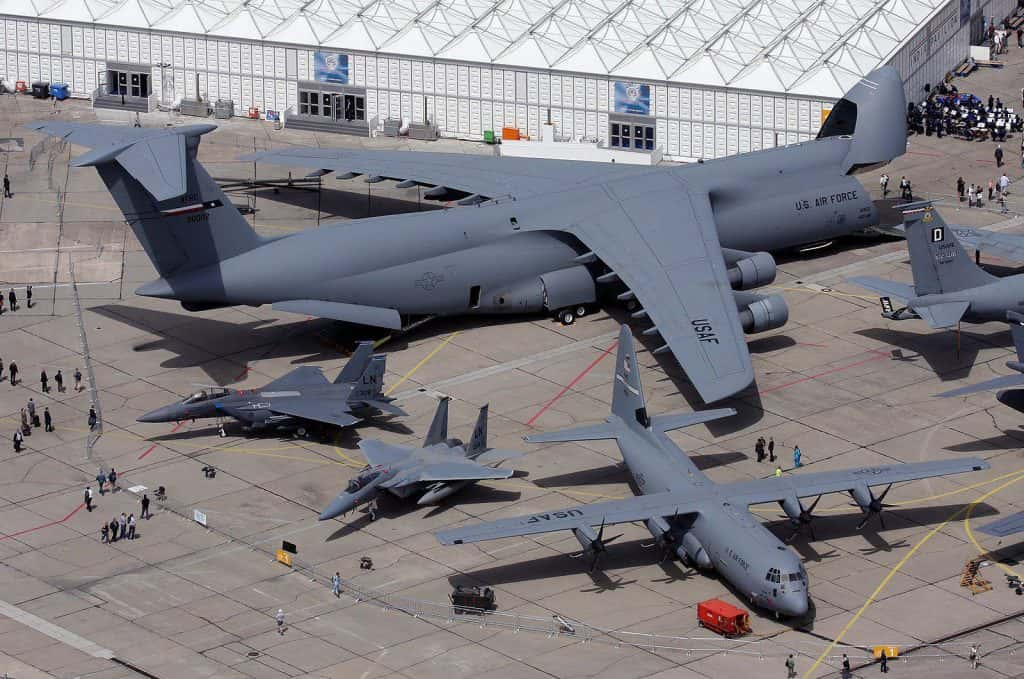
Here Are The Biggest, Baddest Planes In All Of Military History
The Caspian Sea Monster
This is one plane with a fantastic name! The Russian aircraft beast was designed to fly close to the ground for rescue and military missions. This was the sole experimental vehicle ever built, but it was destroyed. You can still get up close and personal with it if you utilize Microsoft’s Flight Simulator X.
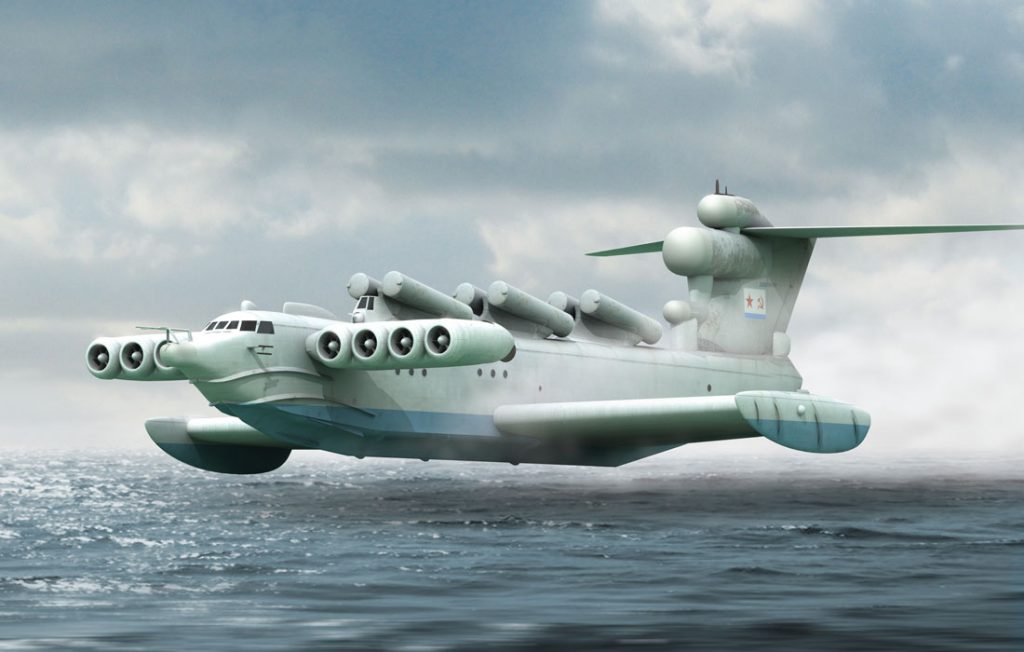
The Caspian Sea Monster
The Xian H-6 Bomber
The Chinese Xian H-6 Bomber made its first flight in 1958. Its military career, on the other hand, lasted much longer. It was also used by the Iraqi and Egyptian Air Forces before being phased out between 1991 and 2000. Various revisions have been made since then, with changes to refueling, storage, and technology.
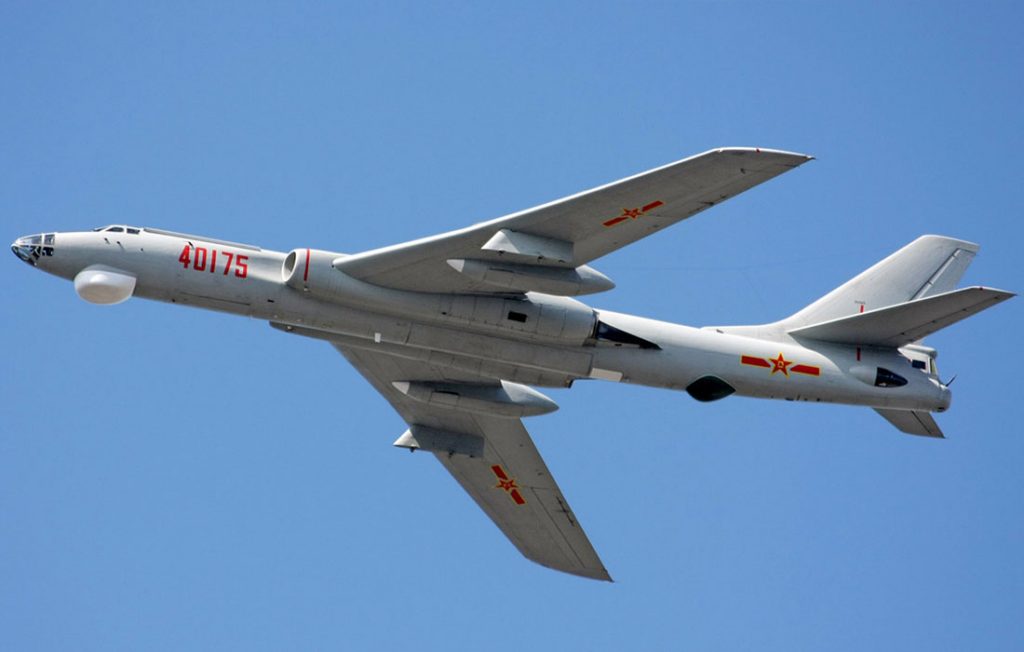
The Xian H-6 Bomber
The MiG-21 Fighter
The MiG-21 Fighter is a Soviet-made jet that has remained in service for more than 50 years. It is the most widely produced supersonic jet in history! Many countries continue to use it now. Since the Korean War, this has also been the most produced combat aircraft. Will it be fashionable in the future? We have serious doubts.
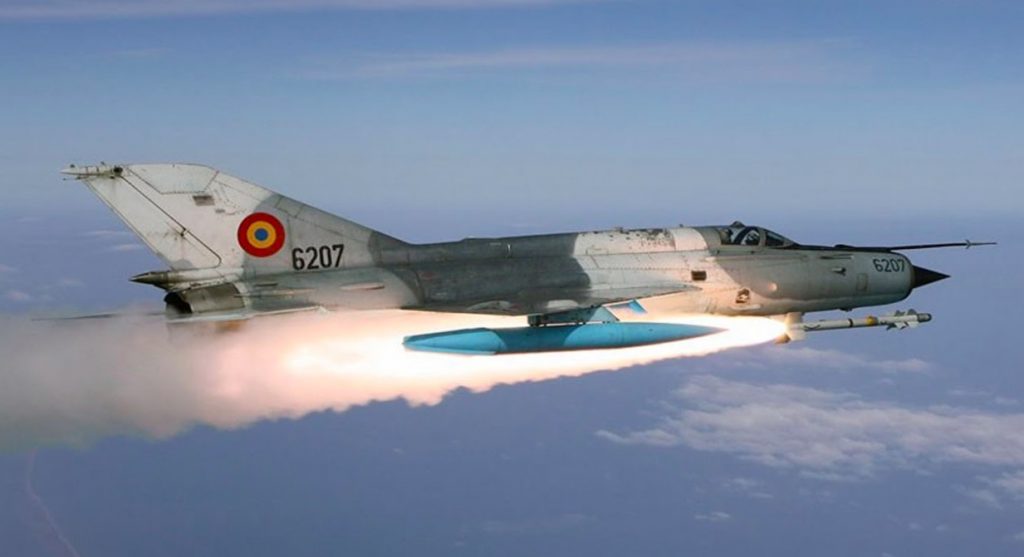
The MiG-21 Fighter
The Kongjing-2000 Radar Plane
The Kongjing-2000 Radar Plane is a Chinese aircraft dedicated to surveillance and other similar tasks. It took off for the first time in 2003. It can detect fighter targets from a distance of up to 470 meters and ballistic missiles from a distance of up to 1200 meters. In 2013, a newer variant of the plane with better radar was spotted.

The Kongjing-2000 Radar Plane
The Convair B-36 Peacemaker
The Convair B-36 Peacemaker served as the Strategic Air Command’s principal nuclear weapons delivery platform for only a few years. It was the first bomber plane capable of delivering nuclear weapons and flying across continents without refueling. It was replaced by the B-52 Stratofortress after it was phased out in 1959.

The Convair B-36 Peacemaker
The Tupolev Tu-160
The Tupolev Tu-160 is the world’s largest and heaviest combat plane. It is a Russian Air Force aircraft that has been in service since 1987. The tips of the propeller blades can travel faster than the speed of sound. This combat aircraft was also the Soviet Union’s final strategic bomber.

The Tupolev Tu-160
The Boeing 747-8 Freighter
Boeing deserved to be on our list since it is the most well-known name in aircraft engineering and manufacture. The 747-8 Freighter, which had a takeoff weight of 975,000 pounds, was introduced in 2005. Earlier versions of freighter jets transported over 50% of the world’s flying freight at one point.

The Boeing 747-8 Freighter
The Supermarine Spitfire
The Royal Air Force is the primary user of the Supermarine Spitfire. It was the only British aircraft constructed throughout WWII that did not go out of production after the war ended. During the Battle of Britain, it played an important part in combating the German air force. In the European, Pacific, and Mediterranean theaters of combat, it was also the premier fighter plane. Among aviation aficionados, it is still one of the most admired and beloved planes.

The Supermarine Spitfire
The Hughes H-4 Hercules
On the ground, there are monster trucks, but what about in the air? This raises the threshold for so-called monster planes in the aerospace industry. During WWII, the Hughes H-4 Hercules was designed for transatlantic missions. However, it was not completed in time to complete the task at hand. It only took one short trip, but it is still the world’s largest flying boat. It also has the largest wingspan of any plane ever built.

The Hughes H-4 Hercules
The An-225 Mriya
This Antonov watercraft was built in the Ukrainian Soviet Socialist Republic in the 1980s. The An-225 Mriya is still regarded as the “undisputed superstar of the sky,” according to CNN! It’s essentially a cruise liner that flies. It has a takeoff weight of 640 tons. It took a rare journey to Australia in 2016 to deliver a 130-ton generator.

The An-225 Mriya
The Convair XC-99
This is yet another gigantic plane that is regarded as a trailblazer. The Convair XC-99 is only surpassed by Hercules as the world’s largest piston-powered aircraft. It features a 230-foot wingspan and six rear-mounted turbines. It is undoubtedly a force to be reckoned with! It delivered 40,000 tons of cargo during one voyage. It was decommissioned in 1957 and is presently housed in Ohio.

The Convair XC-99
The Ilyushin Il-76
If you can believe it, the Ilyushin II-76 is 152 feet long! It was created in 1974 to replace an Antonov aircraft. It can attain a top speed of 559 mph. It was Russia’s first four-jet heavy transporter. There were about a thousand of these models made, and many of them are still in service today.

The Ilyushin Il-76
The Boeing C-17 Globemaster III
This is a massive undertaking. The Boeing C-17 Globemaster III is one of the most powerful military transport planes ever built. From 1991 to 2015, it was in production. This device costs a startling $218 million per unit. To be honest, we don’t know if that’s a large or small sum in terms of military spending.

The Boeing C-17 Globemaster III
The Boeing KC-135 Stratotanker
The name “stratotanker” combines the terms “tanker” and “stratosphere.” With the KC-135, you have both of these! It was designed to refuel strategic bombers during the Vietnam War. During Operation Desert Storm, it was also used. It can travel large distances quickly, with a top speed of 580 miles per hour.
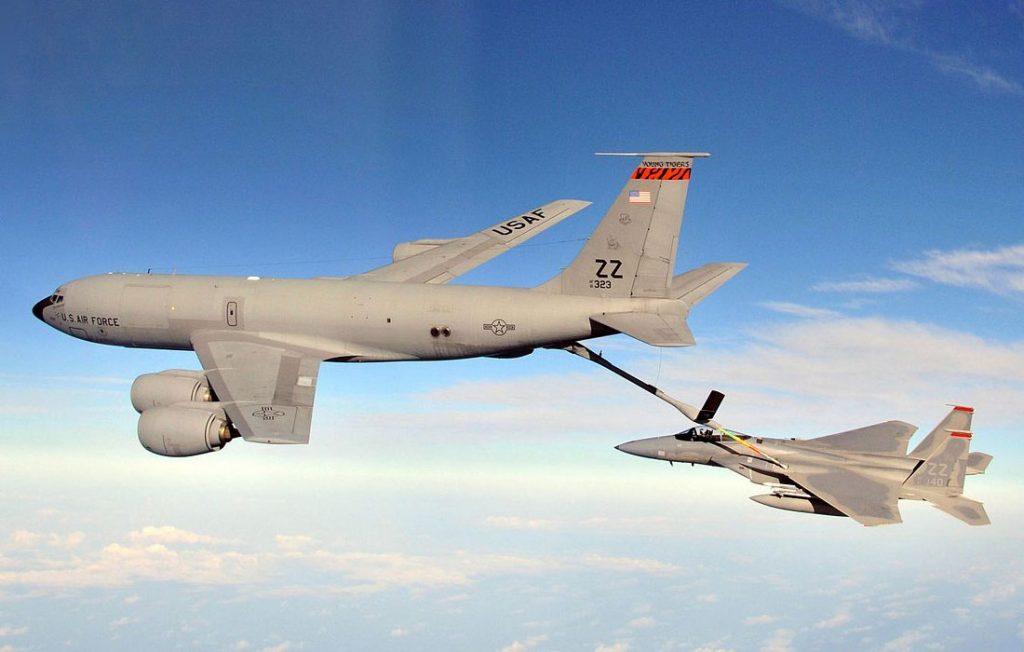
The Boeing KC-135 Stratotanker