
Even if you weren’t alive at the time, we’re positive you’ve heard about humanity’s first landing on the moon. Those who were living at the time were glued to their screens, watching Neil Armstrong take a tremendous step forward for humanity. Because it has received so much media attention, you may believe you already know everything there is to know about it. Buzz Aldrin of the Apollo 11 mission, on the other hand, recently discussed the iconic image that we all identify with the Moon landing. The astronaut’s statements raised a few eyebrows.
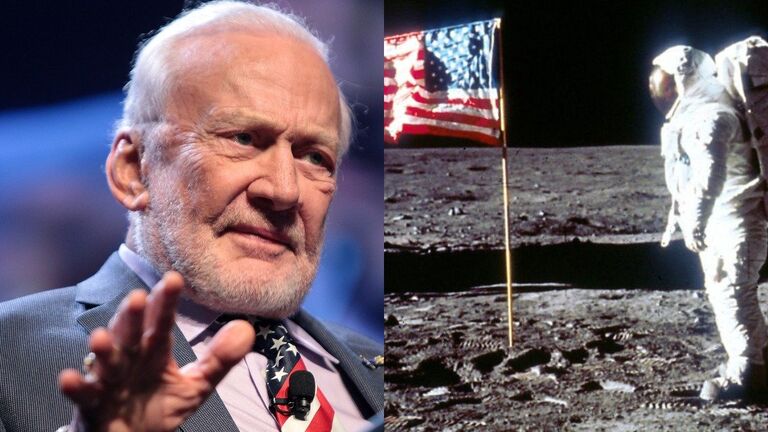
At Last, Buzz Aldrin Has Revealed The Truth About The Famous Moon Landing Photo
About A Particular Photo
A color snapshot taken during the voyage triggered his thoughts about the trip. It was captured by Neil Armstrong, as were all of the still photographs taken on the moon’s surface. Why? At the time, he was the proud owner of a high-performance Hasselblad camera. Of course, this isn’t enough to convince skeptics that Apollo 11 landed on the moon.
About A Particular Photo
They Made It To The Moon
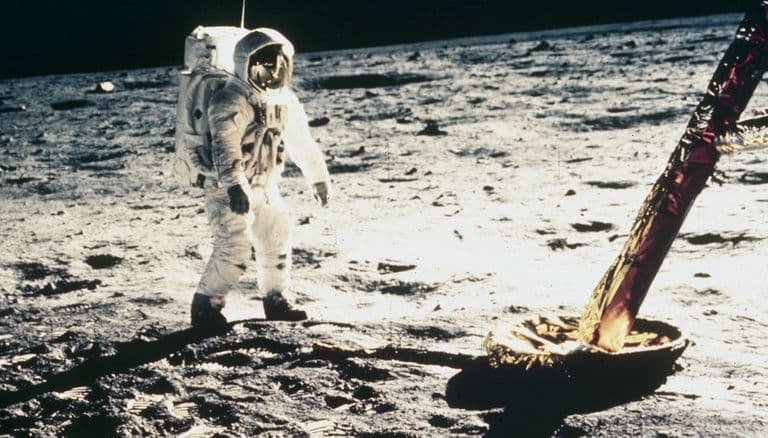
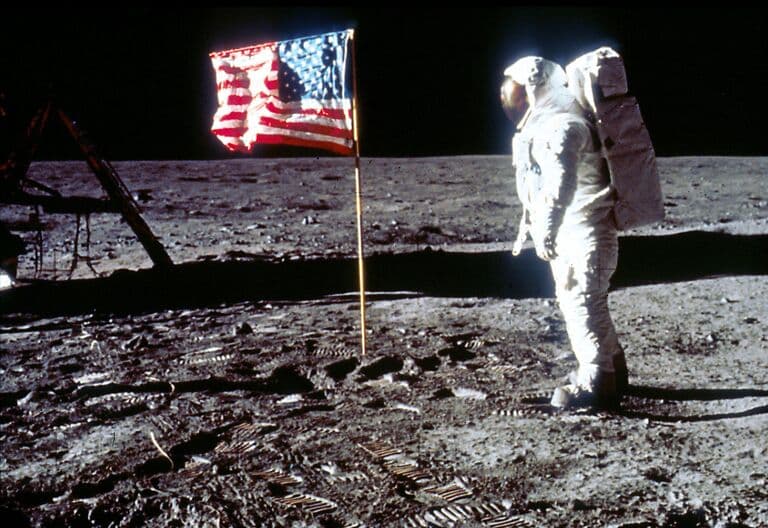
These amazing photographs are the most compelling proof that the team made it to the moon. To begin with, we’ve all seen Buzz Aldrin’s photograph of the American flag fluttering on the moon’s surface. An iconic photo of the first human footsteps on the satellite is also included. It’s only natural that they document the event on film. If you were the first to reach the goal, you’d do the same thing!
They Made It To The Moon
It Has Gotten Criticism
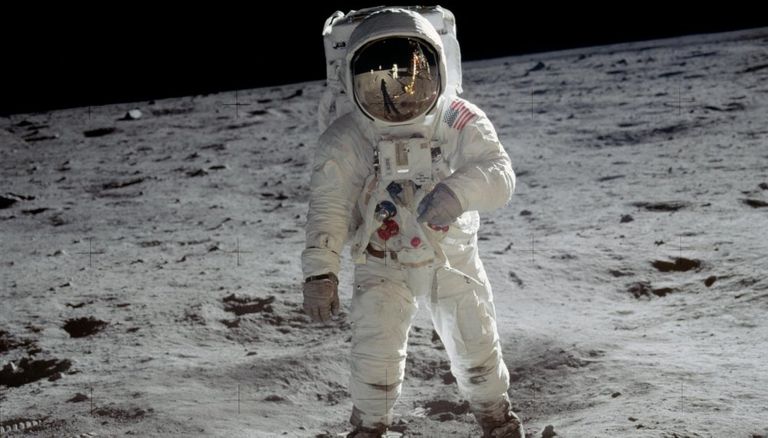
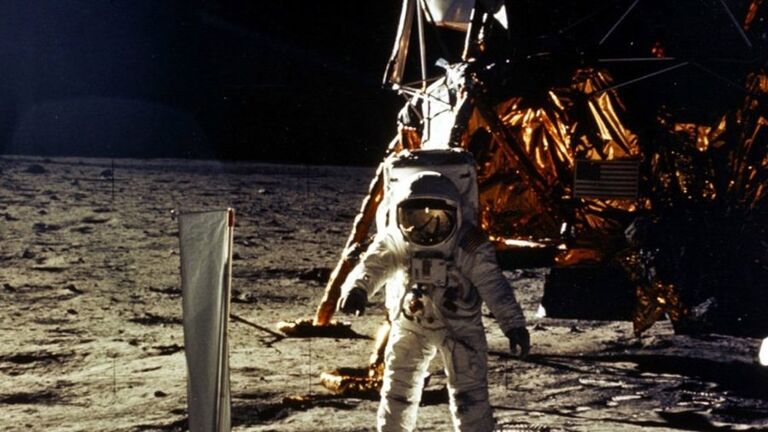
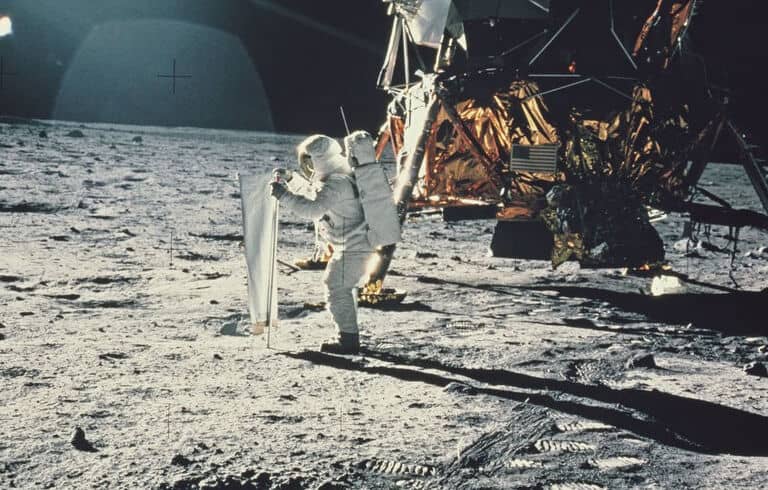
On the other hand, the visor picture has gotten a lot of flak. Neil Armstrong’s reflection can be seen in the helmet visor in the snap with Buzz Aldrin facing the camera. Aside from that, the Eagle lunar landing module may be seen. When asked about that particular photograph, Aldrin revealed facts that no one else was aware of.
It Has Gotten Criticism
He Called It So Well Staged
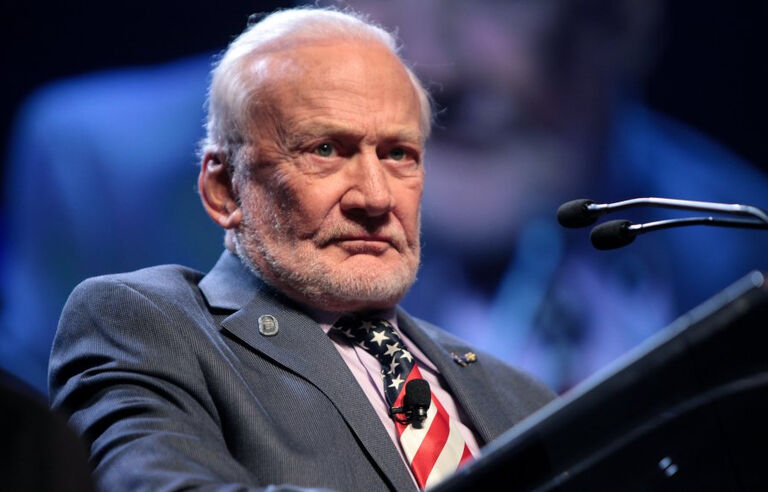
In 2016, the interview took held at the London Science Museum. The lecture addressed a wide range of questions and answers. They used images taken during the Apollo 11 mission, among other things. Aldrin breezed through the questioning until he uttered something unexpected to everyone. The astronaut had mentioned that the experience was “so well staged,” but what did he mean?
He Called It So Well Staged
A Field Day For Conspiracy Theorists
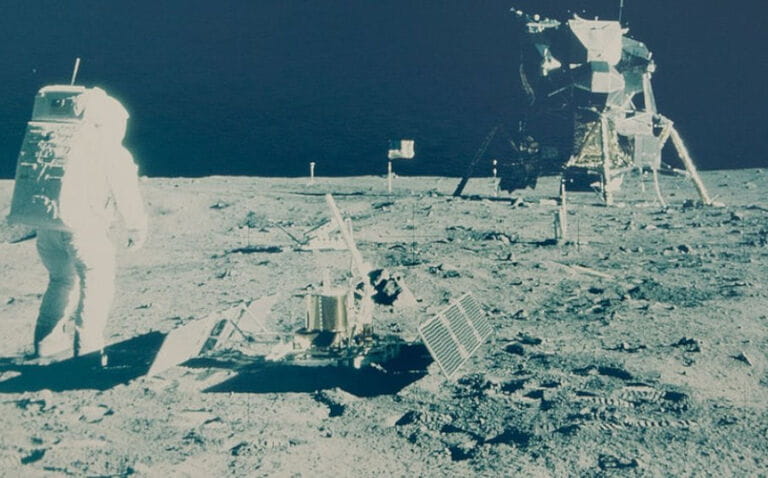
When we heard it, we’re sure conspiracy theorists had a field day. There have been people who feel the moon landing was a hoax for a long time. This was seen as a “fulfillment” of the president’s promise made in 1961. President John F. Kennedy declared before a joint session of Congress that the United States will reach the moon by the end of the decade.
A Field Day For Conspiracy Theorists
American Ambition On Full Display
Despite some accusations that it was motivated by revenge against the Soviets, it was a remarkable example of American ambition. This goal of bettering the US space program must be understood in a historical context. The United States and the Soviet Union’s Cold War spilled over onto the battlefield. During the Korean War, Aldrin was a fighter pilot! There was also the Space Race to contend with.
American Ambition On Full Display
The Soviets Were Leading The Way
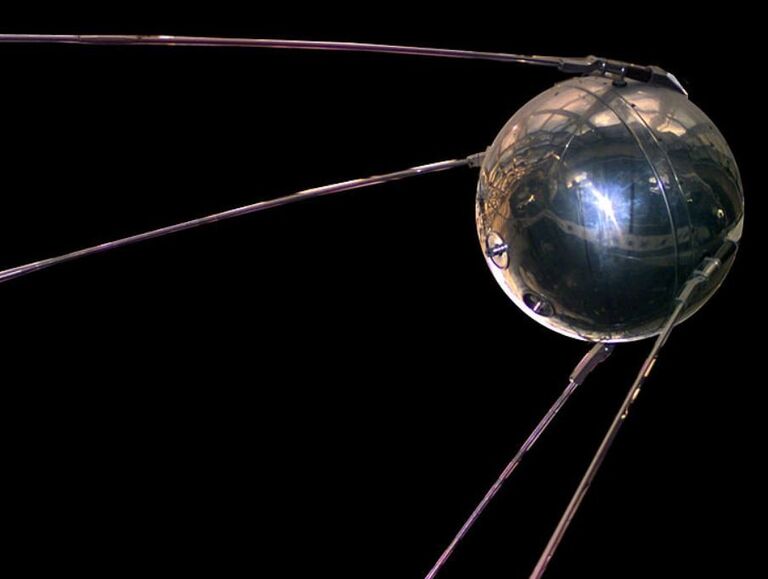
The USSR had already overtaken the US in space research by the time the US declared its goal of reaching the moon. Sputnik, the world’s first orbiting satellite, was launched by the Soviet Union in 1957. It also sent Yuri Gagarin into orbit for the first time in 1961, making him the first man to do so. The United States set out to land on the moon to catch up with the rest of the globe.
The Soviets Were Leading The Way
Speeding Things Up
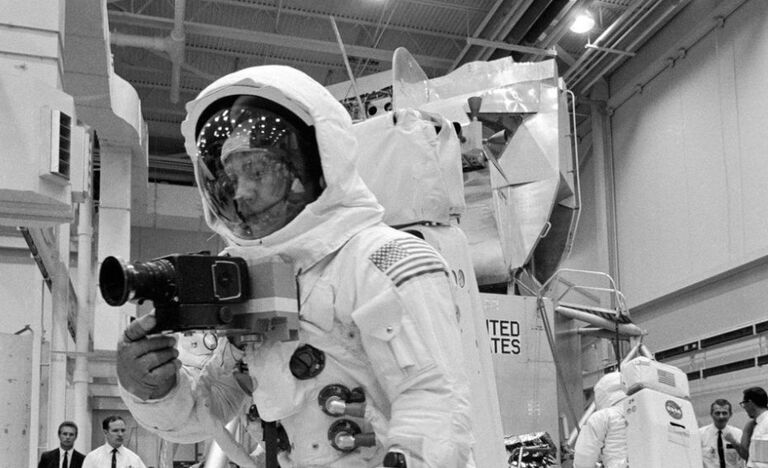
NASA’s space program has been hastened as a result of the president’s vow. The Gemini missions were launched in the 1960s. Aldrin was a member of the crew of Gemini XII, the Gemini series’ final mission. In less than two years, the program had completed all of the numerous maneuvers and procedures required for the eventual moon landing mission.
Speeding Things Up
Putting Men On The Moon
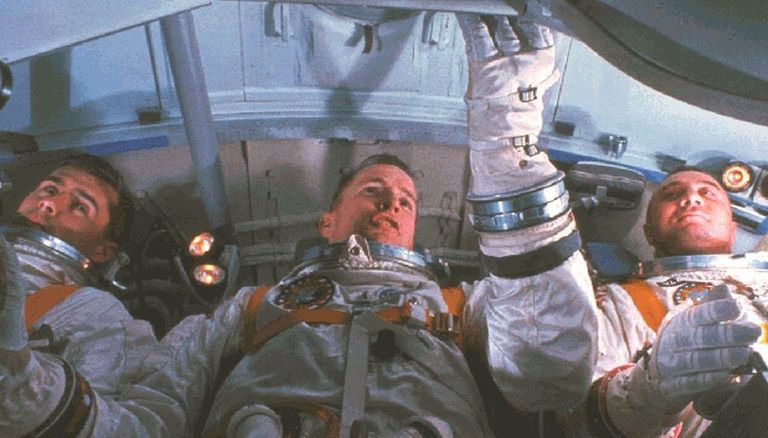
When it came time to plan a strategy for landing men on the moon, the Apollo program was formed. Let’s just say things didn’t start well. When the three-man crew ready to board the Apollo 1 perished during a practice drill in January 1967, everything went wrong.
Putting Men On The Moon
Not Quite As Planned
Apollo 1 was one of the most disastrous missions in American history, and it may have also been the end of the country’s space program. Apollo 1 was the first mission to land a man on the moon, with a launch date of February 21, 1967. On the other hand, the mission never got off the ground.

Not Quite As Planned
A Deadly Fire
Unfortunately, a tragic accident occurred during a launch rehearsal, killing all three crew members. Pilot Gus Grissom, Senior Pilot Ed White, and Pilot Roger B. Chaffee were killed in the fire, which also destroyed the command module. The disaster necessitated a 20-month delay in the space program while the command module’s dangers were dealt with.

A Deadly Fire
How Did The Fire Start?
NASA quickly established the Apollo 204 Accident Review Board to investigate and completely identify the cause of the fire. NASA’s probe was also overseen by a legislative committee. The fire was caused by an electrical fault, which was discovered. Because of the combustible nylon material, as well as the high pressure and pure oxygen chamber, the fire spread swiftly. Due to the cabin’s internal pressure, the plug door hatch for an escape route could not be opened. In October 1968, the next Apollo mission was launched.

How Did The Fire Start
For The Public To Watch
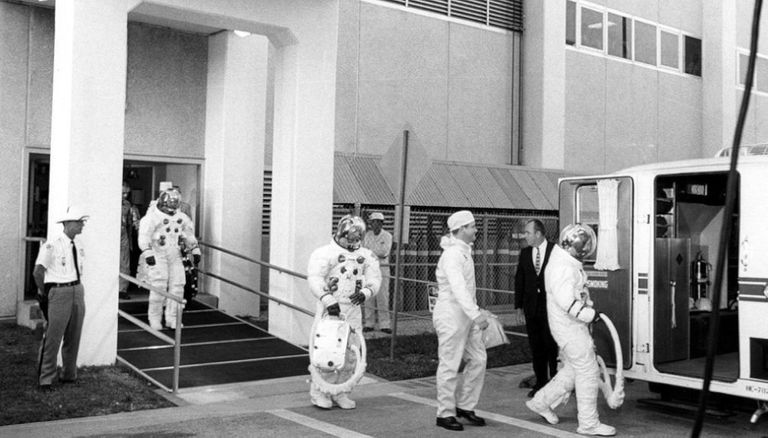
The following crewed mission, Apollo 7, orbited the Earth 163 times with a three-person crew. It was a historic mission since it was the first American mission to broadcast live television visuals to the entire public. Commander Walter M. Schirra, command module pilot Donn F. Eisele, and pilot R. Walter Cunningham.

For The Public To Watch
Preventing Mistakes
Rigorous tests and procedures were developed to avoid a repeat of the Apollo 1 accident. During the 21-month hiatus, crewed flights were suspended, but training continued. Long periods were spent watching the Apollo command and service modules, and they were definitely more cautious. Fortunately, the spacecraft returned eleven days after launch on October 11, 1968, and the mission was a total technical success. The mission’s success encouraged NASA to continue with its space program, and Apollo 8 was a success as well. It eventually culminated in the infamous Apollo 11 mission.
For The Public To Watch
The Apollo 11 Team
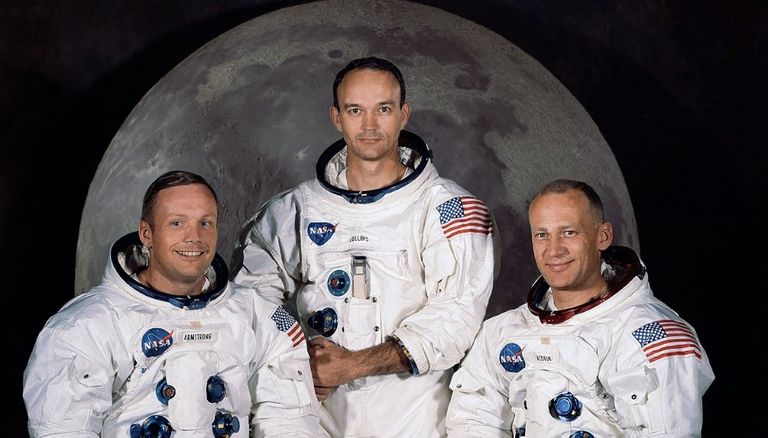
Buzz Aldrin, Michael Collins, and Neil Armstrong were among the astronauts chosen for the Apollo 11 mission. Armstrong was the mission commander, and Collins was the command module pilot. The three of them would be transported back to Earth by the command vehicle. Finally, Aldrin was in charge of landing the spacecraft on the moon’s surface and returning to the command module as the lunar module pilot.
The Apollo 11 Team
A Famous Crew member
When Neil Armstrong became the first man to walk on the moon, he was both an astronaut and an aeronautical engineer. He has some NASA experience prior to Apollo 11. In 1962, he was sent to the NASA Astronaut Corps’ second batch. He became the first civilian astronaut when he flew into space for the first time as a command pilot on Gemini 8. While preparing for Apollo 11, Armstrong suffered a near-fatal accident. He was forced to eject moments before a disaster during his second and final mission.

A Famous Crew Member
Preparation
Before leaving, they did a lot of planning. Everything was addressed, from emblems, call signs, and mementos to site selection. On February 8, 1968, five prospective landing sites were picked and publicized. Years of investigation using high-resolution pictures of the moon’s surface led to this revelation. It was determined to follow a set of guidelines. A perfect day, for example, would limit the temperature variations that a crew member would be exposed to while also reducing the number of craters on the site.

Preparation
People Came To Watch
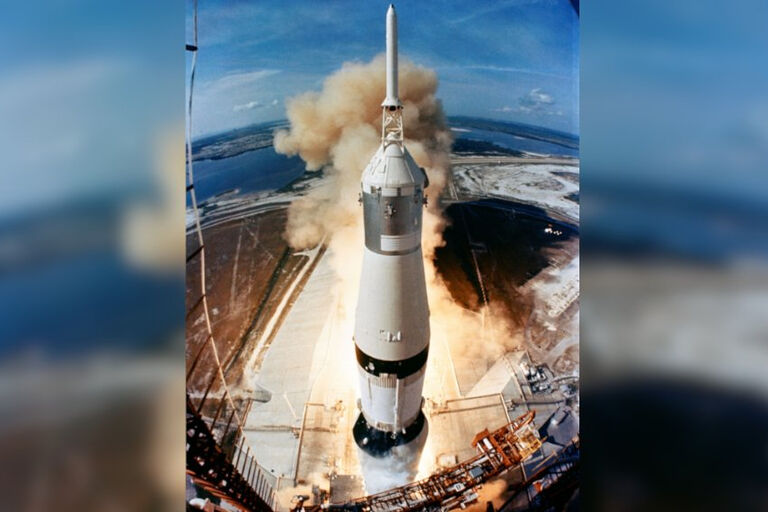
So, on July 16th, 1969, Apollo 11 was launched from Cape Kennedy with its 363-foot-tall Saturn V rocket. The spacecraft was made up of four pieces, and this was just one of them. The service module, lunar module, and command module were the other three. Hundreds of thousands of spectators saw the three-person crew blast off into space. Some folks, on the other hand, are adamant that they did not go to the moon.
People Came To Watch
On The Way To The Moon
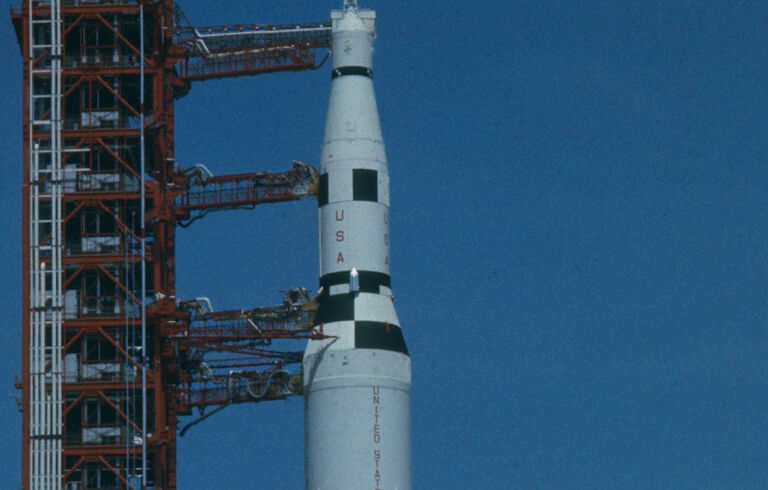
With the help of the three pieces that make up the Saturn V rocket, the spaceship was on its journey to the Moon after departing the earth’s atmosphere. The first sent them into space, while the second stayed on the ground and pushed them into orbit. They appeared to be finally on their way to the moon. At least, that’s how it appeared to the general population.
On The Way To The Moon
The Modules Had To Split Up
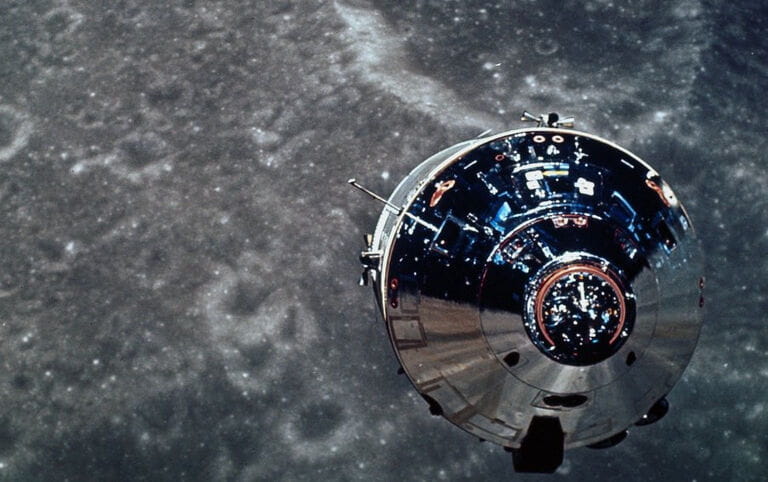
Just three hours after the spacecraft was launched, the mission entered a critical phase. The separation of the modules from the rocket is what we’re talking about. The Columbus module had to detach from Eagle in order to shift into the proper configuration. These two components were successfully rebuilt in order to launch a mission to the moon. The astronauts only traveled for a little more than two days to reach lunar orbit. As the expedition progressed, the entire globe watched in awe.
The Modules Had To Split Up
Flying Close To The Surface
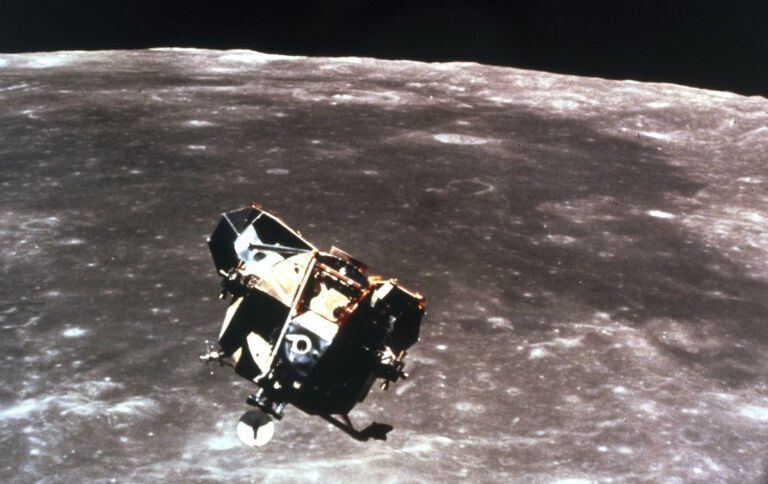
On the morning of July 20th, Armstrong and Aldrin entered Eagle, leaving Collins alone in lunar orbit. They were getting ready to launch the lunar module to the moon’s surface. Before it was time to land, they had circled the satellite around twelve times. This was a critical juncture in the journey.
Flying Close To The Surface
Making The Final Descent
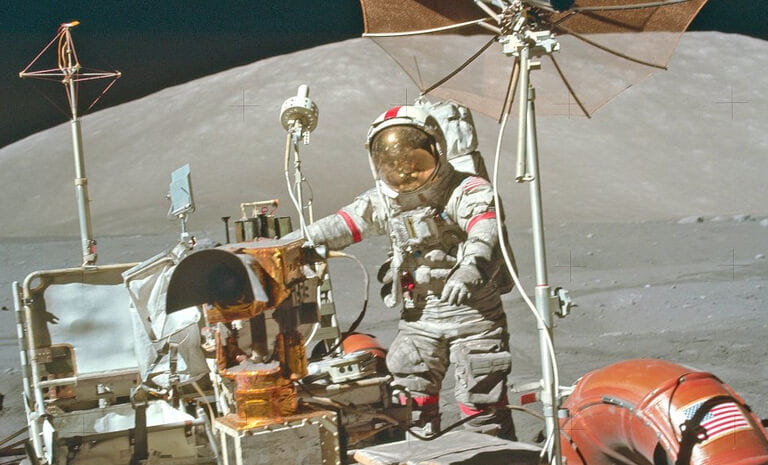
The orbit of the moon module has to be changed from circular to elliptical. This would allow them to get as near to the surface as 50,000 feet. The astronauts had no choice but to finish the final fall using Eagle’s engine at that time. Armstrong switched the spaceship to manual mode at a distance of 500 feet.
Making The Final Descent
They Landed On The Moon
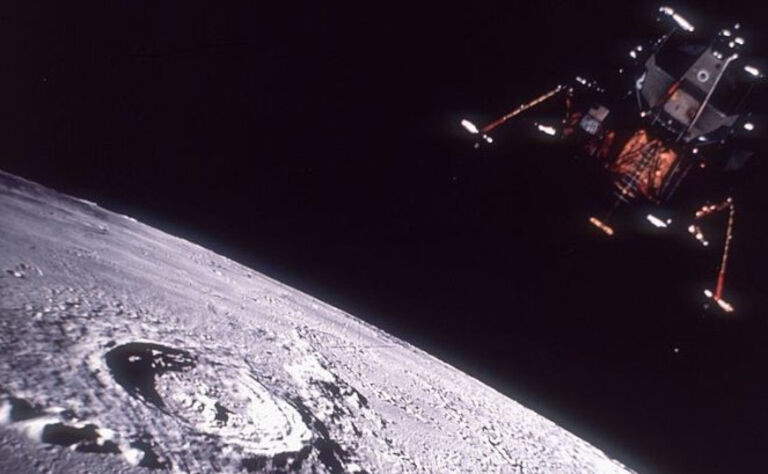
Finally, the lunar module touched down safely on the surface of the moon. “Houston, Tranquility Base here. The Eagle has landed,” Armstrong famously declared. The original flight plan provided for a four-hour rest period before they could depart the capsule. As soon as Armstrong and Aldrin set foot on the moon’s surface, they had to prepare to leave.
They Landed On The Moon
The Sea Of Tranquility
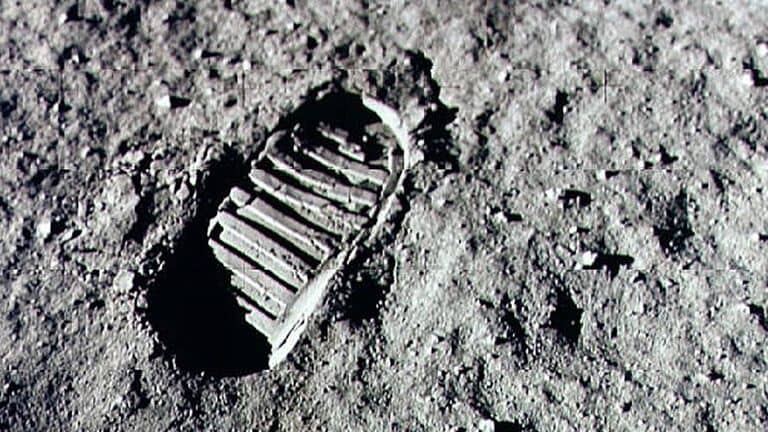
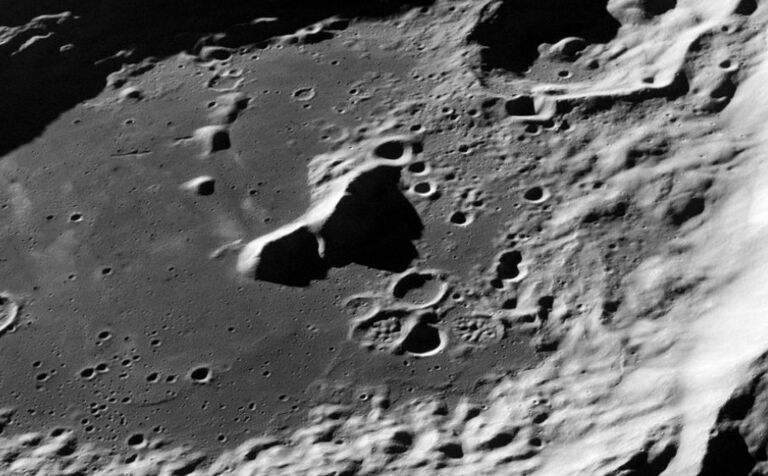
The preparation for their departure from Eagle took approximately four hours. Armstrong finally ventured out onto the landscape of the Sea of Tranquility after a little more than 110 hours. He also included a note that became a significant part of the momentous occasion: “That’s one small step for man, one giant leap for mankind.” It had been so intense that he left out the “a” he planned to say.
The Sea Of Tranquility
Exploring The Surface Of The Moon
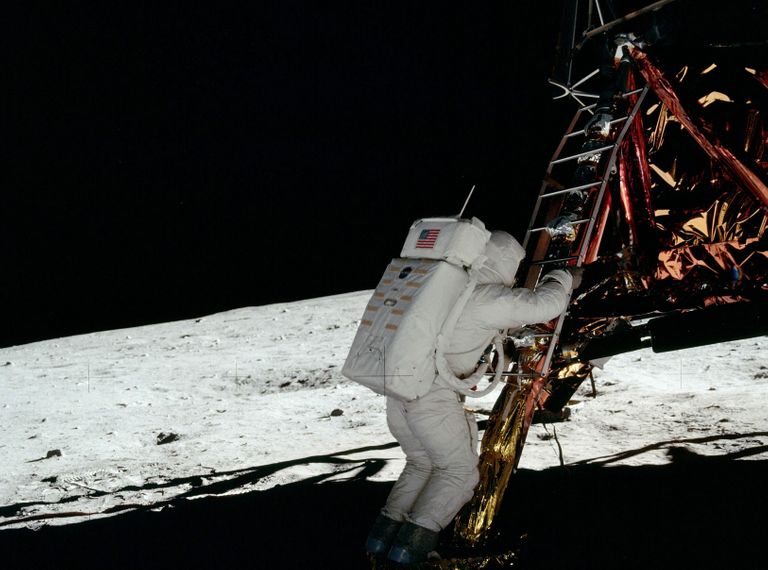
Aldrin climbed down the short ladder and stepped out onto the moon’s surface about twenty minutes after departing Eagle. Armstrong had finished installing the television camera that would broadcast the view to millions of people across the world by that point. The rest of the world was able to follow them on this incredible adventure. The astronauts spent two and a half hours investigating the terrain around them before returning to the lunar module. As far as we know, this is the official version of the story.
Exploring The Surface Of The Moon
How Long They Spent There
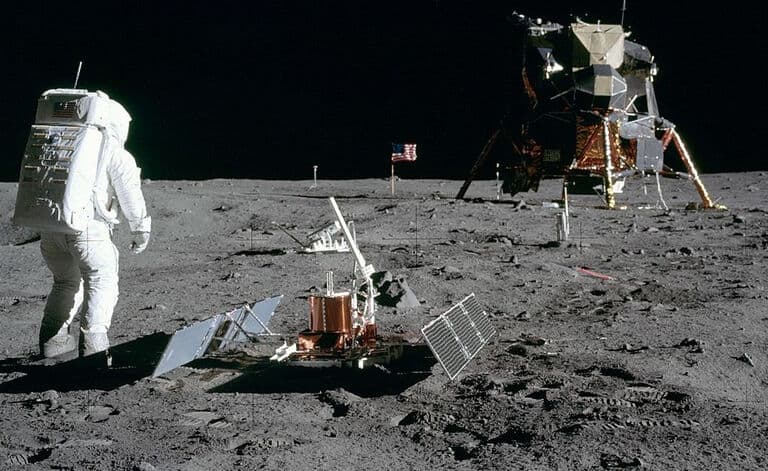
Before leaving, Armstrong and Aldrin spent around 22 hours on the moon’s surface. The two astronauts took a bunch of fantastic photos while outside Eagle. Some of them, we’re sure, you’ve seen before. People who claim they never visited the moon have cited supposed photographic anomalies to back their allegations that the landing was a hoax.
How Long They Spent There
Claiming It Was All Faked
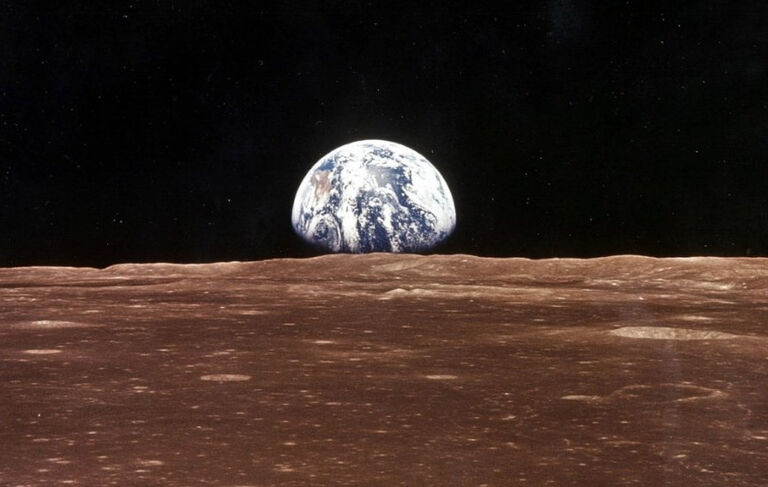
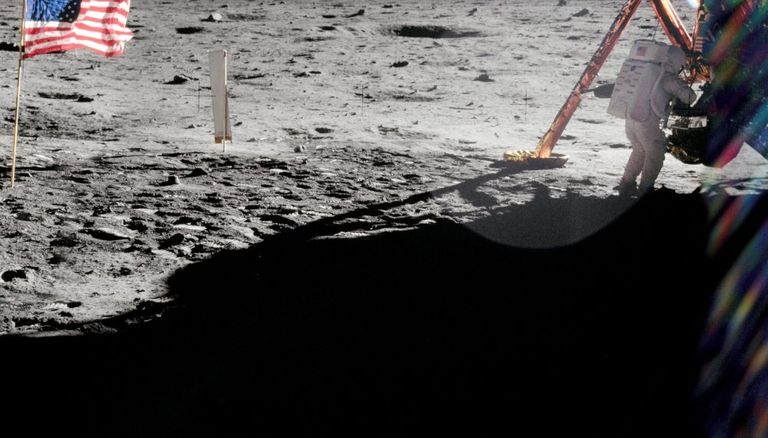
Photographs that were reportedly taken by Armstrong have been used by so-called “moon truthers” to refute the moon landing. They believe it was all a set-up and a scam. Are you interested in hearing what we’re talking about? They have pointed out, among other things, that the shadows on the surface are not parallel. Skeptics say that this suggests studio lighting was utilized instead of real lighting on the moon.
Claiming It Was All Faked
What An Expert Had To Say
Experts have weighed in on the issue. The British National Space Academy’s head, Anu Ojha, informed the Royal Museums Greenwich in London more about it. He said, “This is on the surface of the Moon, but we can reproduce this effect any time we want to on Earth. You have all seen this phenomenon yourself, where, because of perspective, parallel lines appear to be non-parallel.” However, it was not enough for others.

What An Expert Had To Say
Debunking Their So-Called Proof
“If you are trying to reduce onto a two-dimensional plane a three-dimensional situation, you can make lines do all sorts of weird things. Artists have been using this for centuries,” Ojha went on. He didn’t stop there; he also busted another photography myth. As proof that the Apollo 11 mission was a hoax, he cited the “truthers'” claim that no stars were visible in the sky during the mission.
Debunking Their So-Called Proof
Why There Are No Stars
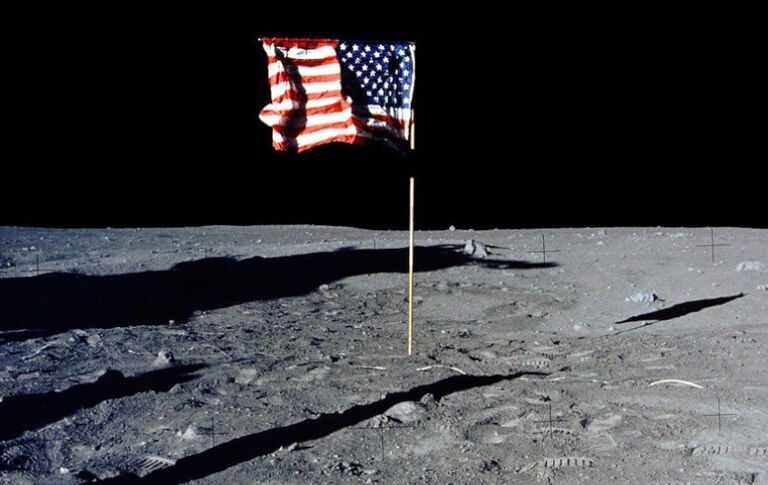
There’s a reason why there aren’t any celebrities in these photos. It was actually during the day when the photos were taken! Because of the sun’s brightness, the stars could not be seen. The way a breeze appears to be floating the flag is another “proof” provided by the truthers. The lack of wind in the photo, according to some conspiracy theorists, indicates that it is a fake.
Why There Are No Stars
The Wrinkles On The Flag
However, there was a strengthening pole at the top of the flag. There are creases as well, which can be easily explained. “All the wrinkles are there because it’s literally been screwed up for four days en route to the Moon,” Ojha said. He also added, “We find ourselves awash in an ocean of information online… The only tools we have to navigate through this maelstrom are the critical-thinking skills that we are trying to develop in people as scientists.”
The Wrinkles On The Flag
Someone Was Not As Calm
It’s impressive how thoroughly Ojha studied these assertions. Others, understandably, have been unable to retain their composure when presented with the theories. Buzz Aldrin, as you might expect, is not pleased with the criticism and speculation that has surrounded the lunar landing.

Someone Was Not As Calm
A Much Bigger Guy
The one who bore the brunt of his wrath was Bart Sibrel. He was 37 years old, 6 feet 2 inches tall, and weighed 250 pounds when he met Buzz Aldrin. He was 72 years old and a sliver of the astronaut’s size. In 2002, Aldrin was persuaded to go to a Los Angeles hotel for what he thought would be a Japanese television interview.

A Much Bigger Guy
How He Reacted To The Claim
Bart Sibrel greeted Buzz Aldrin as soon as he arrived at the hotel. According to the stranger, the astronaut swore on the Bible that he had visited the moon. He was able to accomplish this with the help of the other astronauts on the mission. He didn’t anticipate Aldrin to smack him across the face!

How He Reacted To The Claim
Did Not See It Coming
Sibrel told the St. Petersburg Times “I was very surprised that he hit me. I thought it was very foolish of him to do it in front of two video cameras. He has a good punch. It was quick, too. I didn’t see it coming.” Aldrin was not charged because Beverly Hills police determined that his punch was made in self-defense.

Did Not See It Coming
An Interview With Brian Cox
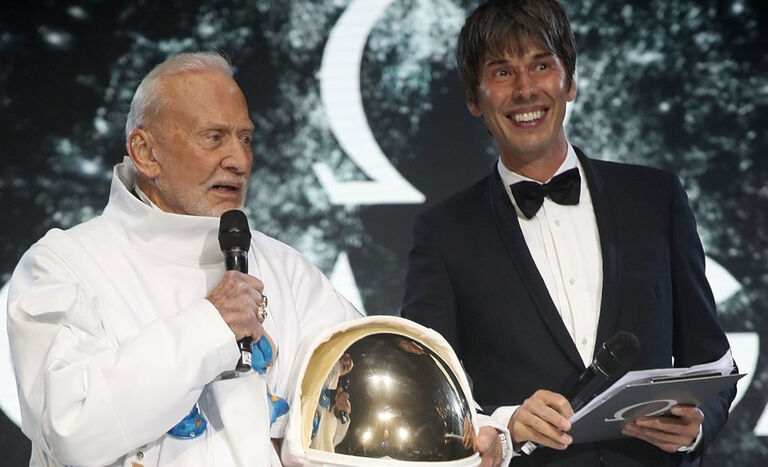
Buzz Aldrin was in a much better mood when he spoke in front of a live audience in London in February 2016. The occasion in question occurred at the Science Museum. Brian Cox, a scientific TV broadcaster who also lectures particle physics at the University of Manchester, interviewed him. The astronaut made the “staged” statement at this point.

An Interview With Brian Cox
The Iconic Visor Photo
Later, Buzz Aldrin and Brian Cox dissected one of the flight’s most iconic photographs. We’re referring to the aforementioned visor photo. As you may recall, it’s a photograph of Aldrin standing in the Sea of Tranquility. Armstrong and the camera may be seen through the visor.
The Iconic Visor Photo
Not Armstrong But Aldrin
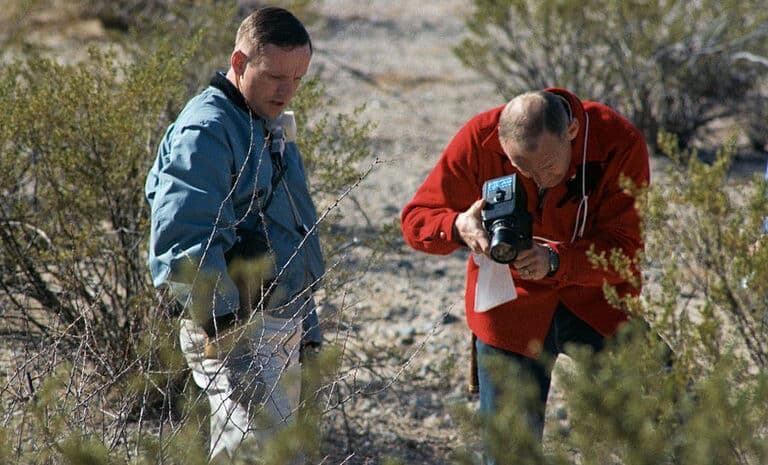
This sight took Brian Cox entirely by surprise. The scientific TV personality said in a video captured at the occasion, “It’s probably the most famous picture from the surface of the Moon, I would say.” He also mentioned a widespread misunderstanding about the photograph in question. “Many people say that’s Neil Armstrong,” he said. “But in fact, it’s you with Neil in the reflection.”
Not Armstrong But Aldrin
The Most Iconic Photo Ever
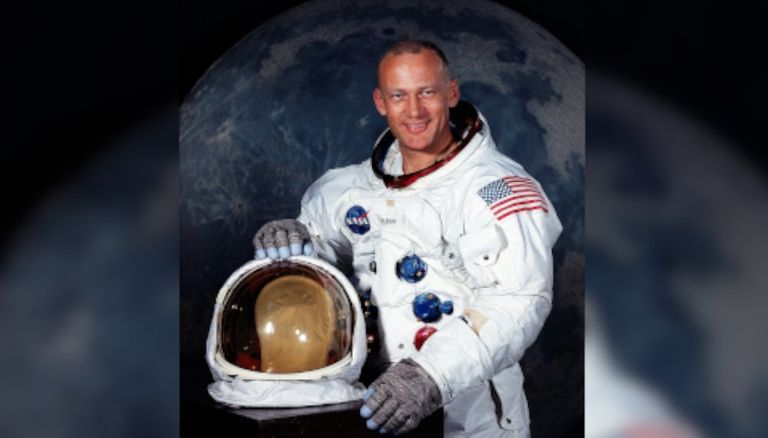
Cox said a lot more. He told Aldrin: “It’s probably the most iconic picture in human history.” The astronaut also took the time to discuss the photograph. “Neil’s such an excellent photographer,” Aldrin shared. “See, I was walking along like this,” Waggling two fingers to depict how he was walking at the time was his demonstration.
The Most Iconic Photo Ever
How It Came To Be
“Armstrong said, ‘Hey, stop!’ So I stopped and looked at him and he took the picture right away. You can identify that I was moving just a little,” Aldrin said, “But people ask me about it – because it’s so well staged – and we call it the visor picture because the reflection in the visor shows the landing craft and the white-suited astronaut, Neil, who took the picture.”

How It Came To Be
All About The Location
He went on to say, “People have asked me why is that such a perfect and iconic picture and I’ve got three words. Location, location, location.” The live audience burst up laughing at this remark. It’s not hard to figure out that Aldrin has used that remark before. To be fair, he had plenty of opportunities to practice public speaking throughout the years. “It’s so well staged,” as the term goes, has gotten a lot of attention.
All About The Location
Taking It Out Of Context
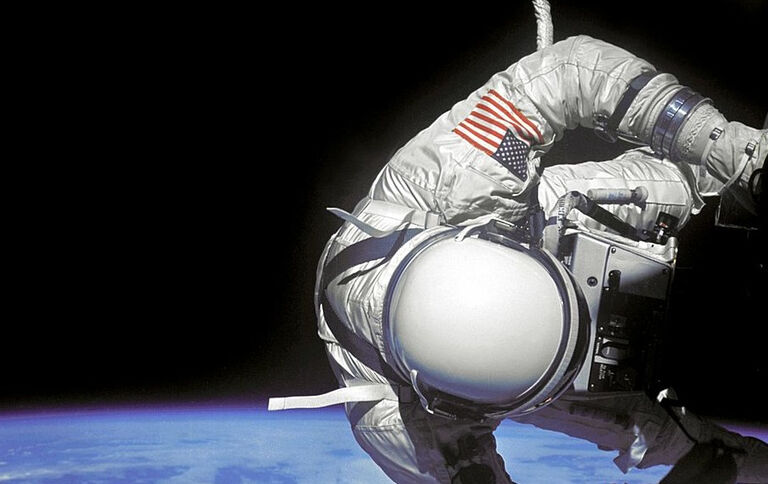
We all know how easy it is, especially in this day and age, to take things out of context. This has been utilized by moon truthers as more evidence to support their assertions. The top page of the Daily Express read: “‘It was so well staged!’ Buzz Aldrin’s Moon landing confession revealed after 50 years” in July 2020.
Taking It Out Of Context
If It Were Indeed Staged
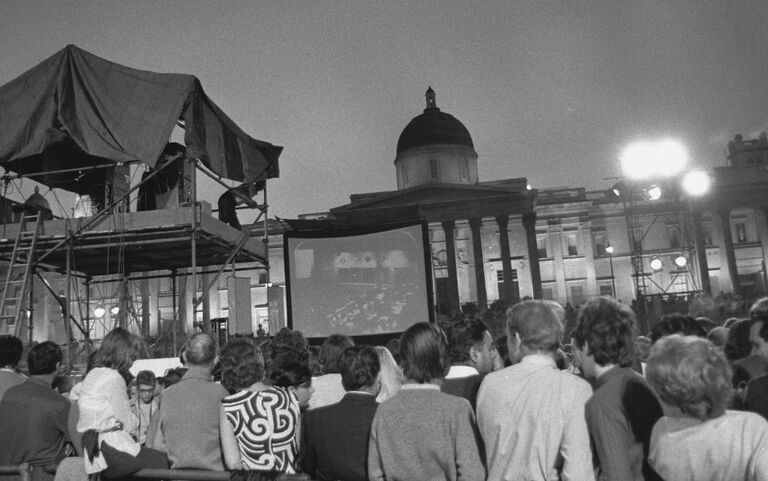
You’d think he was implying that the Apollo 11 mission was a complete hoax and that the images were manufactured if you didn’t know better. Did Buzz Aldrin, on the other hand, truly feel that the entire mission had been meticulously planned from start to finish? This does not appear to be the situation.
If It Were Indeed Staged
From A Satirical Website
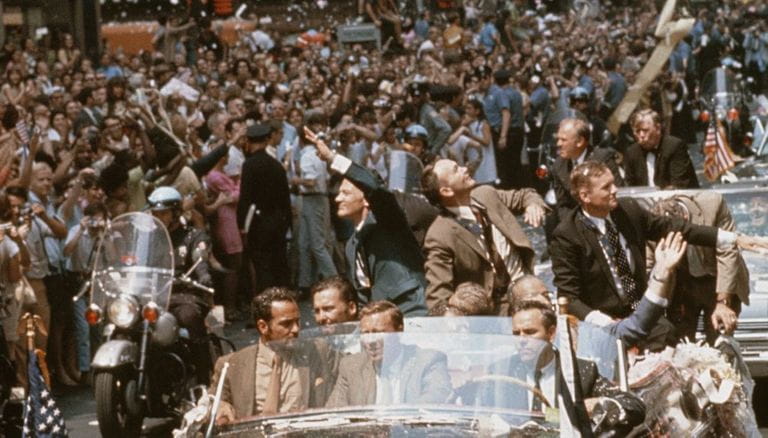
This reminds me of an incident that occurred in 2014. According to Snopes fact-checkers, a website named Huzlers posted a statement in which Aldrin admitted the trip was a fraud. According to Aldrin’s website comment, “Apollo 11 was not real, none of it was. I am ashamed to say this but I cannot hide it anymore, it was a set-up, like the ones they use in Hollywood films.” It is pretty obvious that the quote is fake!
From A Satirical Website
Not Realizing It Was A Joke
The moon truthers went on to allege that Aldrin made this remark and shared it on social media. They don’t mind concealing Huzlers’ status as a hoax site. Finally, by disseminating this false quotation, these people disgrace themselves. In any case, unless you want to get smacked in the face, we don’t advocate telling Buzz Aldrin that you don’t believe the moon landing happened.
Not Realizing It Was A Joke
The Space Race Is Still On
It’s crucial to keep in mind that space exploration isn’t over yet. Indeed, SpaceX’s most recent Demo-2 test plane launch was a spectacular success. A commercial spacecraft visited the International Space Station for the first time. Engineers worked hard to avoid any potential danger while developing the task, as you might expect. Unfortunately, as the mission advanced, even the most brilliant brains were unable to identify a definite threat. This was, after all, a potentially catastrophic miscalculation.

The Space Race Is Still On
A Mission Of Many Firsts
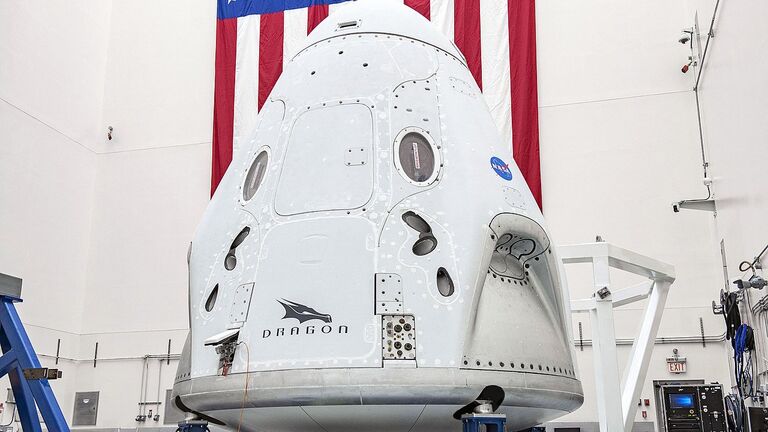
It was a mission that shattered numerous records. The Gulf of Mexico was used as a landing location for the first time by an American space mission. Aside from that, it was the first time since 2011 that American astronauts had launched into space from their homeland. The United States stopped its space shuttle program that year. Its most significant achievement, in our opinion, was its business component. It was most likely a factor in the risks the astronauts encountered on their descent to Earth.
A Mission Of Many Firsts
The First Private Company To Do So
As the first private firm to send astronauts into space, SpaceX made history. SpaceX produced all of the hardware needed with the assistance of NASA’s Commercial Crew Program. It’s little wonder that Gwynne Shotwell, the company’s president, lauded the voyage as “extraordinary.”

The First Private Company To Do So
What Their Plan Is
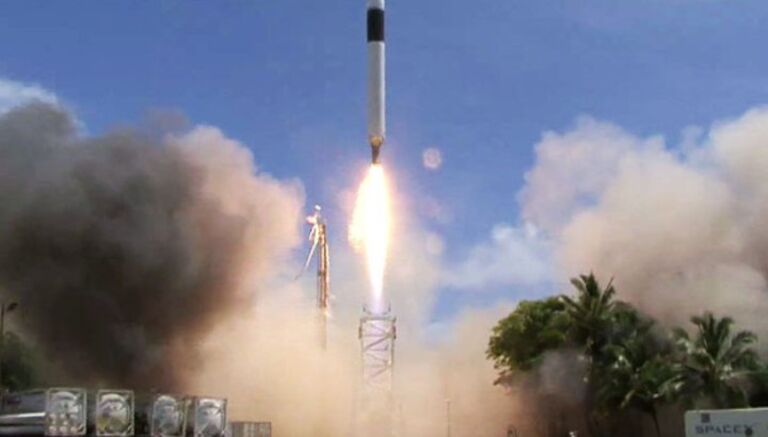
SpaceX’s president and chief operating officer is Gwynne Shotwell. The possibility of the mission made her ecstatic. “This is really just the beginning. We are starting the journey of bringing people regularly to and from low Earth orbit, then onto the moon and then ultimately onto Mars,” she said. We’re hoping that the incident off the coast of Florida hasn’t thrown everything off.
What Their Plan Is