
After a long week at work, everyone wishes to relax and unwind. The majority of people enjoy spending quality time with their families and relatives over the weekend. This family from Alsager, England, is no exception to that same notion.

Family Sees A Weird Creature In Their Backyard, And It Was Looking At Them
An Interruption
When David Scott, a 45-year-old engineer, saw something moving in his backyard, he was getting ready to start a barbeque party with his family. This seemingly ordinary morning turned into a life-changing and mind-blowing experience. So what exactly was it, and why was it in their backyard? Let’s take a look.

An Interruption
The Food Can Wait
That morning, David went outside to play with his young son in the backyard. He was getting ready to start the barbeque after finishing the play. He froze in his tracks as he looked around the yard. What was it that he saw?

The Food Can Wait
An Unexpected Visitor
He realized right away that they had an unexpected visitor. That was no ordinary person, but a strange and frightening wild animal! He knew he had to act right away because of what the animal might do to them if he didn’t act fast enough.

An Unexpected Visitor
A Scary Experience
Imagine going outside your house and seeing a strange animal staring at you from your backyard. So, what are your options? What do you plan to do if you’re faced with this situation? Do you flee? Do you try and drive the animal away?

A Scary Experience
A Rare Animal
This family did not own a dog, and this creature appeared to be black and furry. Little did the father realize that he was staring at a scarce and exotic animal that only a few people will ever see. So, how did David react?

A Rare Animal
What Animal Is It
According to his wife Anna McArdle, David yelled, who later described the strange morning in an interview. He was yelling that there was an odd-looking creature in the backyard. Anna and the kids were terrified! I mean, who wouldn’t? Is it possible to blame them? But, more importantly, what the hell was that thing?

What Animal Is It
He Couldn’t Move
While he stood there, frozen, David had a million thoughts running through his mind at the spot. Is this a dangerous animal? Is it possible that this creature will attack them? He couldn’t help but think of every possible scenario in that situation.

He Couldn’t Move
It Started Moving
While David was attempting to recover from his state of confusion, the biggest drama was about to unfold. When the creature began walking towards them, you won’t believe what happened!

It Started Moving
Letting Out A Scream
Anna came out of the house after hearing the scream and saw this strange creature slowly approaching David! She initially mistook it for a dog, but she realized she was mistaken as the animal approached. So just what exactly is this creature?

Letting Out A Scream
A Possible Answer
Upon closer inspection, it appeared to be a fox with a bushy tail, but the animal was a different color. It was silver and black rather than orange, and it was much larger than the fox. Then Anna came up with a brilliant answer as to what animal it is.

A Possible Answer
Heading Inside
She instructed David and her son to return to the house, which they did. The family locked the door and waited for the creature to leave while keeping an eye on it! So, what would they do after going inside?

Heading Inside
It Didn’t Look Wild
It’s impossible to predict how wild animals will react, and David and Anna had never been in a situation like this before. Looking through the windows, they noticed that this animal didn’t appear to be quite as wild as they had assumed. They realized they couldn’t leave it there any longer. So, what did they do after that?

It Didn’t Look Wild
Time To Make A Move
Instead of fleeing or retreating, the creature continued walking until it came to a halt in front of the front door. Through the window, it was staring right at the family. Anna then decided that it was the perfect time to make a move!

Time To Make A Move
Help From Social Media
She took photos of the animal with her phone and then posted them on social media. Is it possible that someone will recognize this animal? Maybe she’d get some responses as to what animal could it be? And she was correct…

Help From Social Media
Receiving News
She shared this bizarre creature on Facebook, and it’s safe to say it went viral. It didn’t take long for Anna to receive some news regarding what this mystery animal really is. Is this animal really wild?

Receiving News
It Can’t Be Real
Amanda Lovett, an RSPCA (Royal Society for the Prevention of Cruelty to Animals) inspector, was able to identify exactly what animal this was, thanks to her post. Still, even she found the answer hard to believe. All of them couldn’t believe what the fox really was.

It Can’t Be Real
Seeing The Animal In Person
Since 1824, the RSPCA has rescued millions of animals across the United Kingdom. They have, however, never heard of such an intriguing case before. So Amanda decided to see the animal in person to be sure if it is actually the animal she thinks it is.

Seeing The Animal In Person
A Difficult Task
The inspector set a difficult task for David and Anna. The two were tasked to keep the animal in the backyard and not allow it to leave no matter what! The family was counting down the minutes until Amanda arrived!

A Difficult Task
A Very Rare Fox
When Amanda and her team arrived, they were taken aback when they saw the animal. A silver fox was a scarce find. So, this mysterious creature was a fox after all, but not just any fox; this fox had melanism, which is the polar opposite of albinism. So, instead of white, their fur turns black. But that’s not all…

A Very Rare Fox
Something Odd
Wild foxes are known for their cunning and mischievous behavior. This is because, in nature, carnivorous animals must be resourceful to find their next meal. Amanda, on the other hand, noticed something odd about this fox right away.

Something Odd
Acting Right Away
The strange thing about this creature was that it didn’t appear to be startled by humans. So is it possible that this fox is someone’s pet? Amanda didn’t have time to think about it, so she devised a plan for this scenario.

Acting Right Away
Bonfire Night
The date was November 5th, which is also known as Bonfire Night. The majority of us enjoy the fireworks, but the animals do not. The inspector knew that if they didn’t catch the fox before the fireworks show started, the fox would be scared and flee forever. They may never see it again!

Bonfire Night
Catching The Fox
The animal had to be caught next. “Catching a fox is not an easy thing as they are really fast and they can hide very quickly,” Amanda explained. The rescuers couldn’t tell if the animal was hurt or simply hungry. Finally, they decided to go ahead and do it!

Catching The Fox
A Perfect Strategy
They quickly devised a strategy that involved luring the animal into the utility room and cutting off all escape routes. It would be relatively easy to apprehend the fox from there. But would they be able to execute their plan well and contain the animal?

A Perfect Strategy
It Went Well
Their plan worked out perfectly! Lovett successfully lured the animal into the small utility room and herding it into a cat box. Amanda then dialed a phone number! What followed was incredible. Can you guess what happened next?

It Went Well
Preparing A Facility
They contacted the Stapeley Grange Wildlife Center to inform them that a mysterious new visitor would be arriving. To accommodate their new friend and ensure that this mysterious animal will get the attention that it needs, the center agreed to stay open late.

Preparing A Facility
In Good Health
Silver foxes are extremely rare, as poachers hunt them for their attractive fur. However, the animal center’s employees were immediately enamored with it. They did some research and discovered that the fox was healthy, albeit slightly overweight. Around humans, the fox was quiet, friendly, and content. So they devised a plan to accomplish this!

In Good Health
One Thing Left To Do
The rescuers wanted to find this lovely fox a new home where he would be safe from poachers for the rest of his life. Fortunately, they were able to come up with a solution. This stunning rare fox would be permanently housed at the Grange Wildlife Center! There was only one more thing to do, though!

One Thing Left To Do
A Lovely Name
The animal rescuers decided to give a silver fox a new name now that he was a resident at the RSPCA. His fur was black, fluffy, and beautiful, so he was given the name Shadow. Quite a fitting name for beautiful fox, right?

A Lovely Name
Completely Overjoyed
We are overjoyed to report that Shadow is now living a stress-free, healthy life! He won’t have to worry about poachers anymore, and he’s already making new friends in his new home. In addition, we are delighted that regardless of how David and Anna felt threatened by the animal at first, it didn’t hinder them from acting fast and getting the animal to safety. If you think this is one remarkable story just wait until you see what happened to this next adorable animal. Grab the tissues…

Completely Overjoyed
Paul Russell had a serious surprise in store for him. From Pennsylvania, he was worried about a distant relative of his. This relative was going through a difficult time, and Paul wanted to help somehow.
Making A Decision
At the age of 82, the distant relative of Paul Russell had just moved home from his house in Pennsylvania. The man lived on his own till he could not take care of himself with a mysterious disease.

Making A Decision
Left Behind
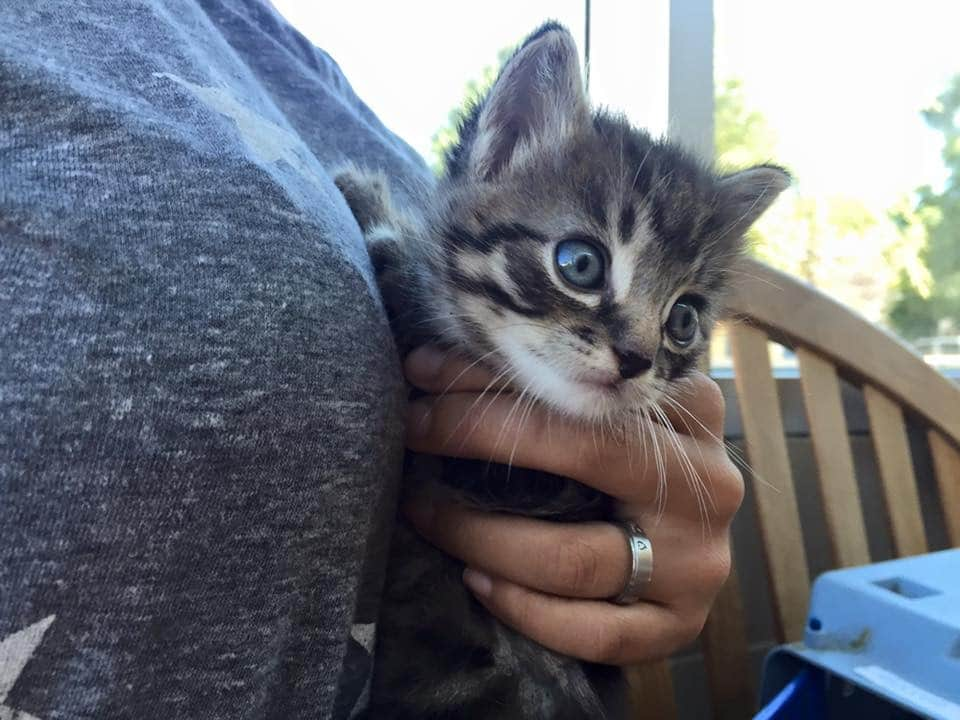
His family moved him to a nursing home closer to them so that they could keep an eye on him. While this was the best option for the man, his family didn’t know very much about him, taking him out would lead to a strange series of events.
Left Behind
Entering The House
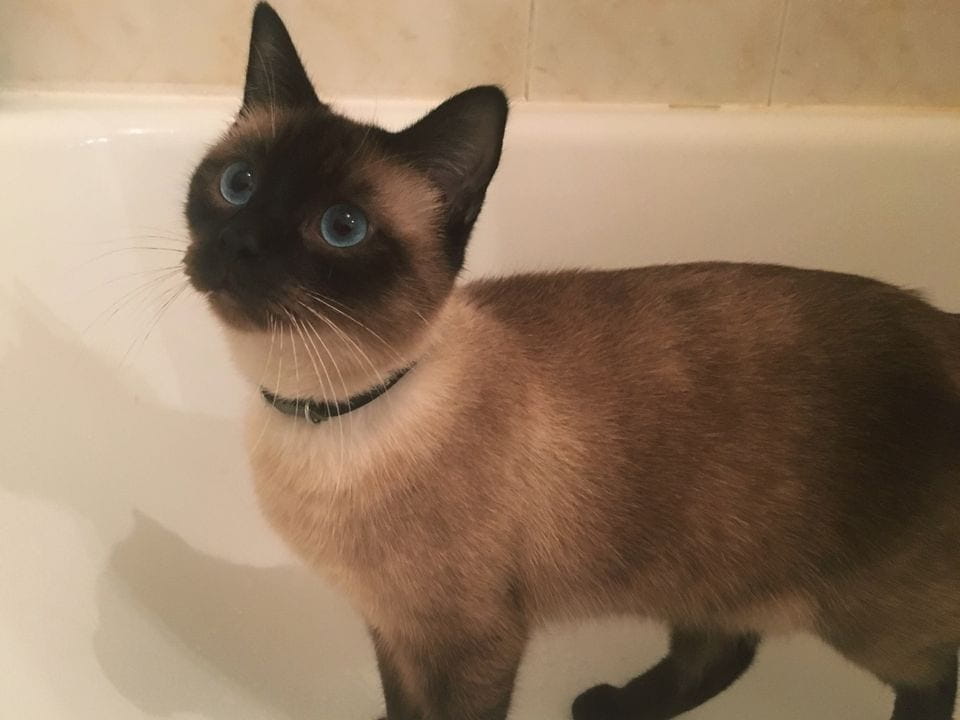
Undoubtedly, no pets were allowed at the nursing home. Unfortunately, this implied that Siam was left behind, the man’s beloved 17-year-old Siamese cat. Paul saw this opportunity to help. Paul and his spouse, self-described animal lovers, had a few pets.

Entering The House
Derelict
But Paul soon discovered, Siam wasn’t the only “animal” in that room. Paul walked up, opened the front door, then flicked on and off the light switch. Nothing’s there. He’d have to go into the cellar and locate the breaker, but first of all, he had to get something.

Derelict
A Creeping Feeling
He returned to his car, grabbing his emergency flashlight. But he almost dropped it when he placed the spotlight within the hallway. It reached him with a smell first, and Paul stumbling, lost the vision in the hallway; the whole house was filled with garbage from floor to ceiling.

A Creeping Feeling
Scratches
The windows were darkened, and, strangely the walls had odd marks. Paul could not shake the sensation that he was being watched as he moved slowly through the room. He was trying to end his thoughts on mice, snakes, and worse.

Scratches
Hiding In The Dark
He had goosebumps as he shone the beam of the flashlight on the walls. Who, or what, did this? Where was Siam? Paul examined the markings on the walls and found that the wallpaper had been gouged.
Hiding In The Dark
Frozen
With his heart in his throat, he walked down the hallway. He called quietly, “Kitty, kitty.” Suddenly he felt strange, and all his emotions immediately shouted at him to run away. But before he gets out, he had to find Siam as soon as he could.

Frozen
Hiding Out
To find Siam’s food bowl, Paul walked into the kitchen. He filled it with cat food that he brought with him, but Siam didn’t come surprisingly. His heart dropped after a couple of minutes, shouting his name.
Hiding Out
Not Alone
Paul would never find him in the dark if he were hiding–there are too many places. He realized that he would have to go down to the basement to turn the switch. Yet he heard a sound that shocked him to the core even before he had entered a darkened stairway.

Not Alone
A Huge Creature
A loud, piercing cry filled the room, and Paul froze through the house. Then he listened to a thump, but the noise was coming out of another room this time, the bathroom ending up in the hall. He cautiously approached the door and was prepared to move his legs.

A Huge Creature
Going Back In
With his foot, he kicked open the door and pulled back the curtain of the shower. There was Siam — camped in the stall bathroom that ease him. The cat was scared and starving. Who knows when he had a decent meal over the last period.

Going Back In
Trapped
Paul began to think about Siam; then, he heard a different sound from the darkness, that brought the cold of his blood. Paul heard a faint grumbling, resounding in the whole hall from the room. But if the cat was with him here, then who made that sound?
Trapped
At The Vet
He reassured himself at first that it was probably only a frightened raccoon that entered the abandoned house — so it explained why Siam was stuck in the bath, right? He slid across the door and had a look he will never forget.
At The Vet
A Cat
Though most of us could have taken Siam to run, Paul had the best of him unexpectedly. “I started searching around, and suddenly this huge creature darts out from under the bed and runs down to the cellar, and I thought, ‘What was that?’”
A Cat
Hidey
Frightened, Paul ran out of the house. Before he went back to the cellar, he would have to gather every ounce of bravery he had. So, with his partner, Jill, by his side, they went back to the house. Paul was ready this time.
Hidey
Barbershop
They slowly moved down the stairs, armed with a trap then flashlights. “The next day, I went into the creepy old cellar… I’m down there with a flashlight looking— it was almost like a horror movie. Then I found it hunkering in the corner…” Paul recollects.

Barbershop
Makeover
The creature was cornered and pulled into the pit. Jill stood back, bewildered. When he said the creature looked dusty and seemed to have several legs, she did not believe her husband, but she saw it for herself now.

Makeover
New Family
What did they find? They rushed the alien-looking creature to the veterinarian in the hope of some answers. Paul and Jill were trembling at the vet. What could this creature be? Paul suggested that it might be a wild animal he hadn’t heard of — or a common animal that seemed to have a blanket over it.
New Family
Monster Under The Bed
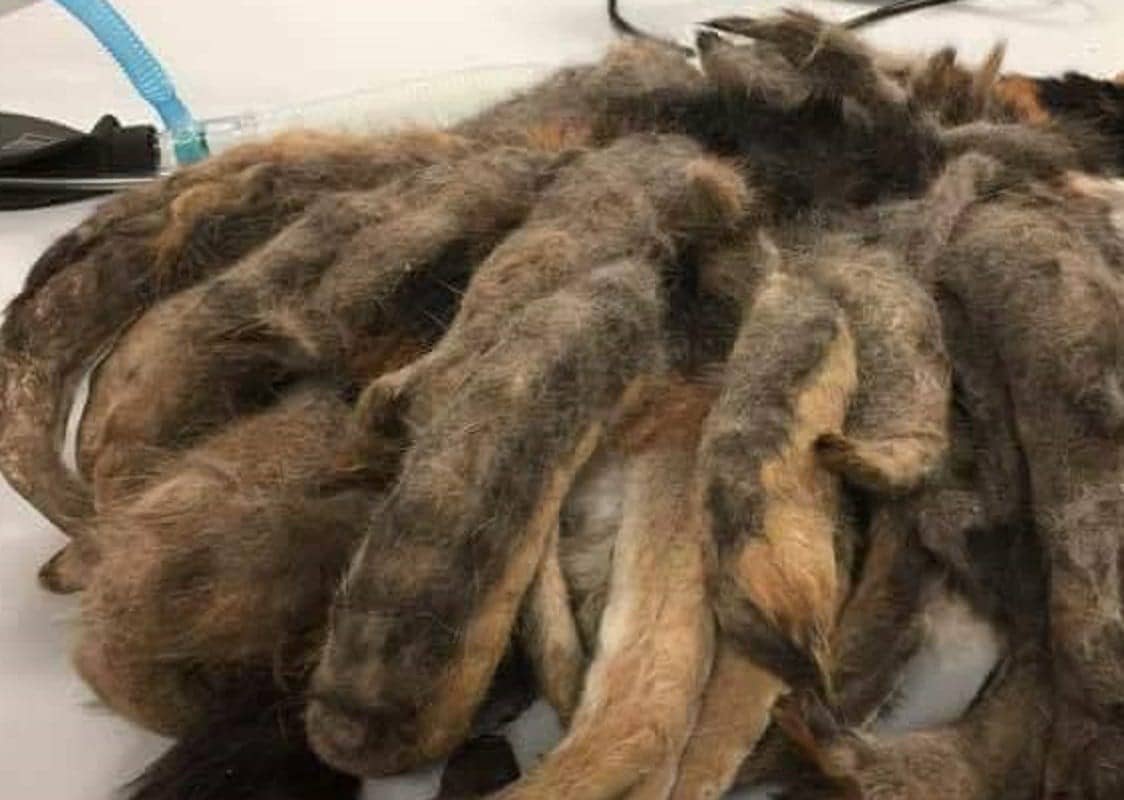
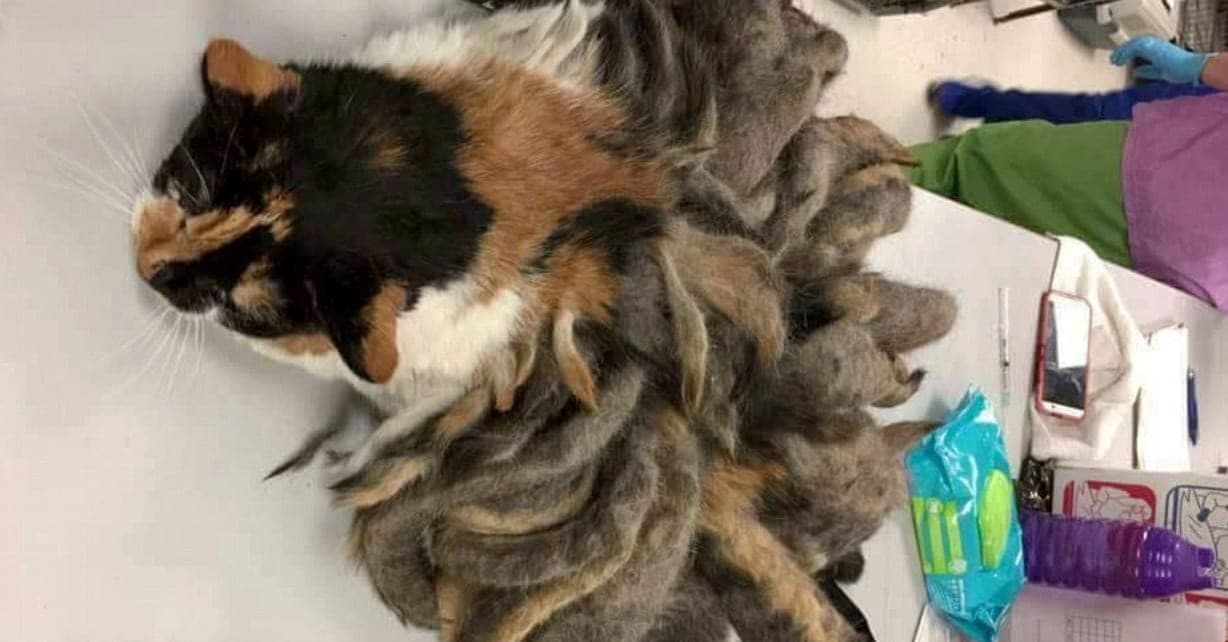
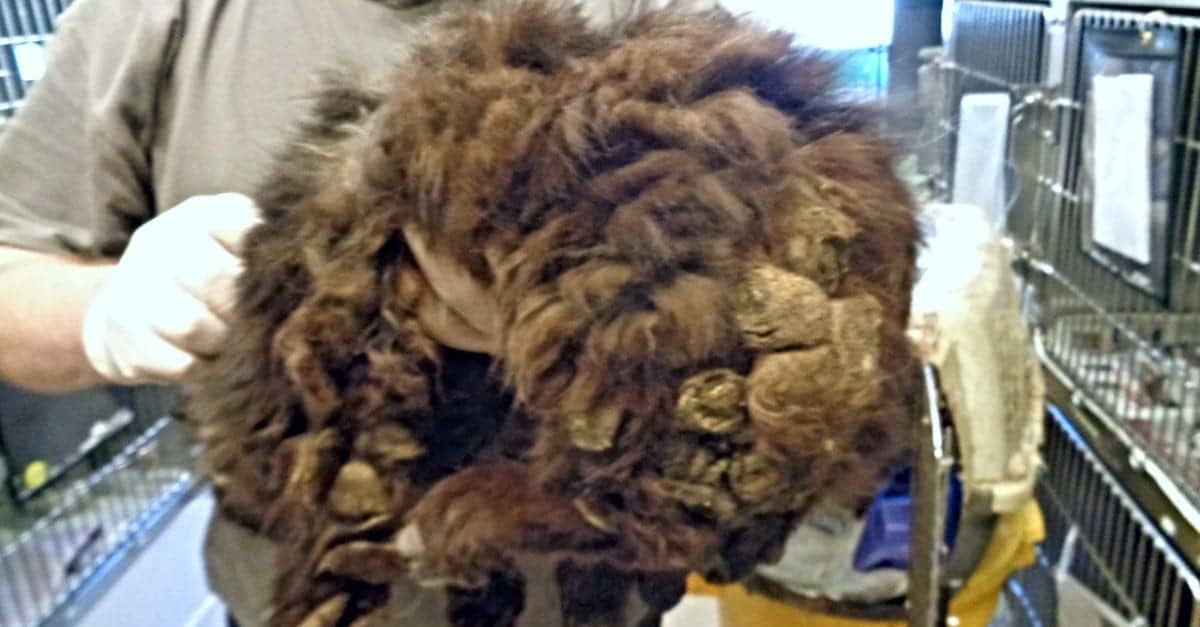
Never before have the vets seen anything like this. Then the strange creature turned around. What they found was a loss of words for everyone. When they turned the animal over, they saw the head— protruding from the many odd “tentacles” that covered its body.
Monster Under The Bed
Working Slowly
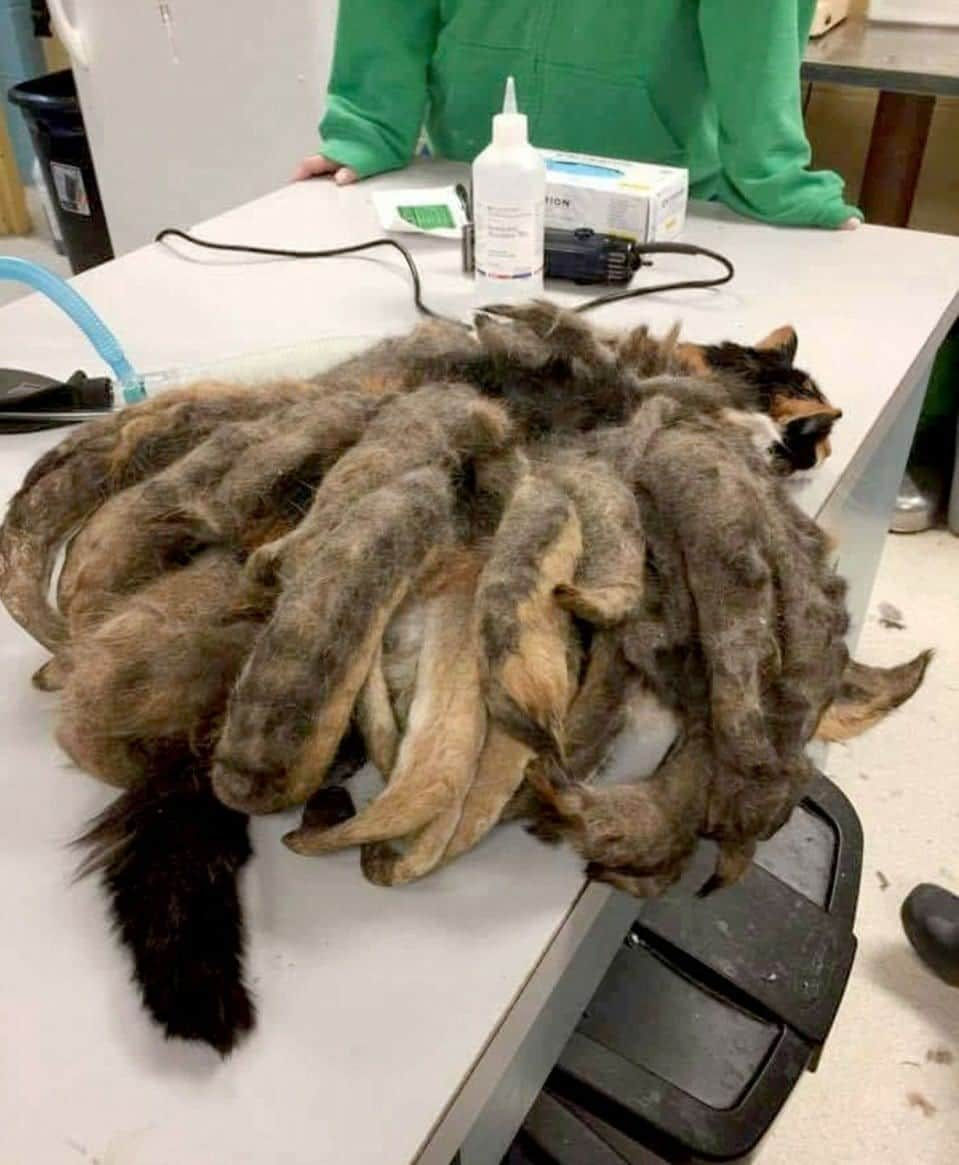
They slowly started cutting off the mass after putting the animal under general anesthesia. “Our Medical team shaved off the pounds of intertwined fur from her body, and, needless to say, she’s feeling so much better now!” Read the Facebook post of the shelter. What animal was it?

Working Slowly
Responsibility
It struck them, then. What animal were they looking at? What caused it to turn beyond recognition? The vets agreed that the only appropriate option, following a series of arguments about the next move, is to give the creature anesthesia to remove all the fur safely.

Responsibility
Looking Out For Each Other
Thanks to its propensity for hiding, the animal, who was aptly called Hidey, was caught under pounds of matt fur. Unfortunately, for a very, very long time, its 82-year-old owner had forgotten Hidey completely.

Looking Out For Each Other
Adjusting
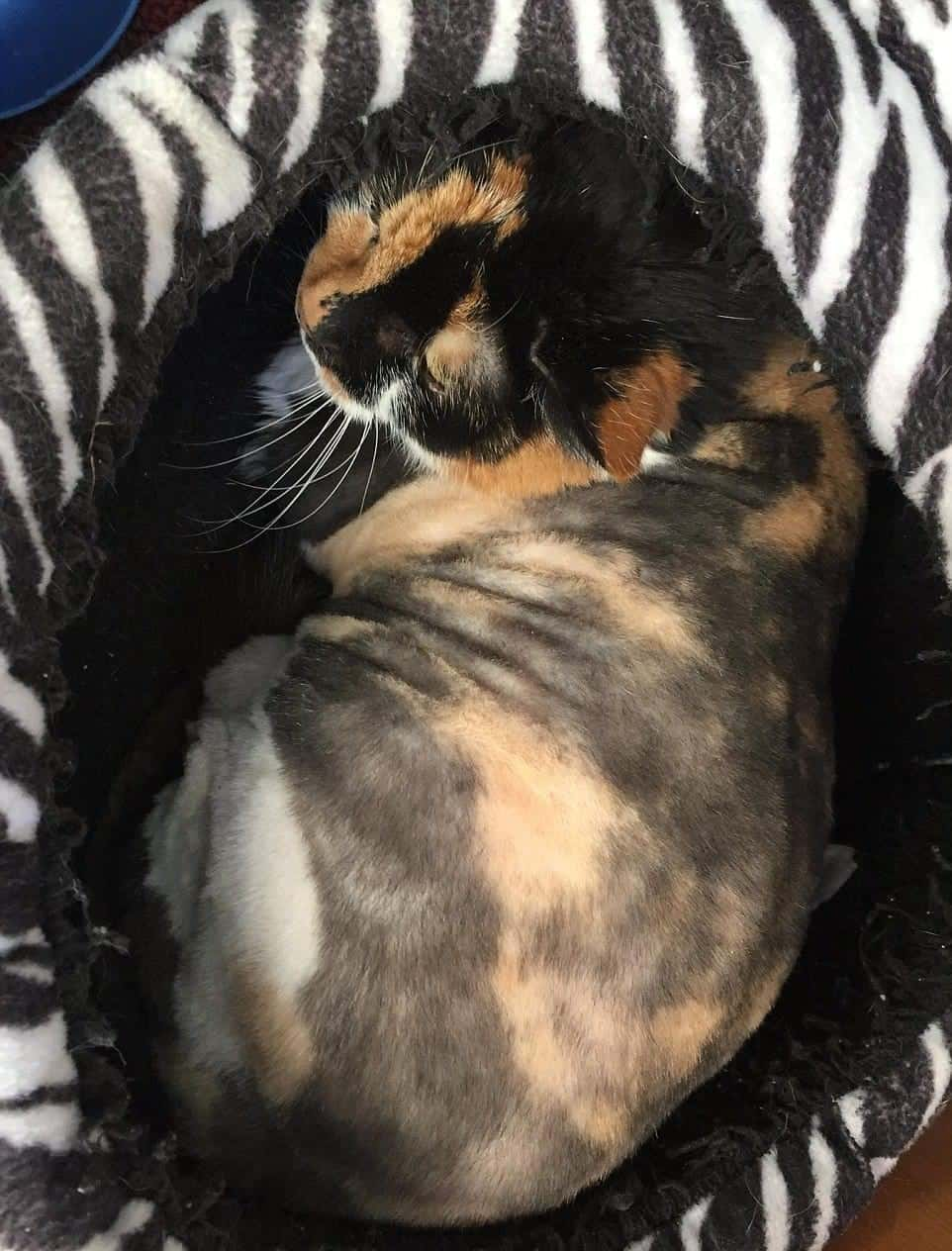
“Hidey was overweight, so that makes it harder for [cats] to groom themselves, and that’s when you see matting happen,” Western PA Humane Society Senior Marketing Communications Manager Caitlin Lasky informed. So it was a cat that they found!
Adjusting
A Happy Ending
But how can the cat’s’ dreadlocks’ get extracted safely? Hidey’s presence impressed the veterinary team.“They hadn’t seen anything like that,” Caitlin Lasky, senior marketing communications manager for Western PA Humane Society, retorted.

A Happy Ending
A Unique Case
“Even looking online, I had a hard time finding anything similar, so it’s a unique case.” In that case, there is the only way to save a cat: you need to shave everything off. But the squad was unable to make errors.

A Unique Case
Two Pounds
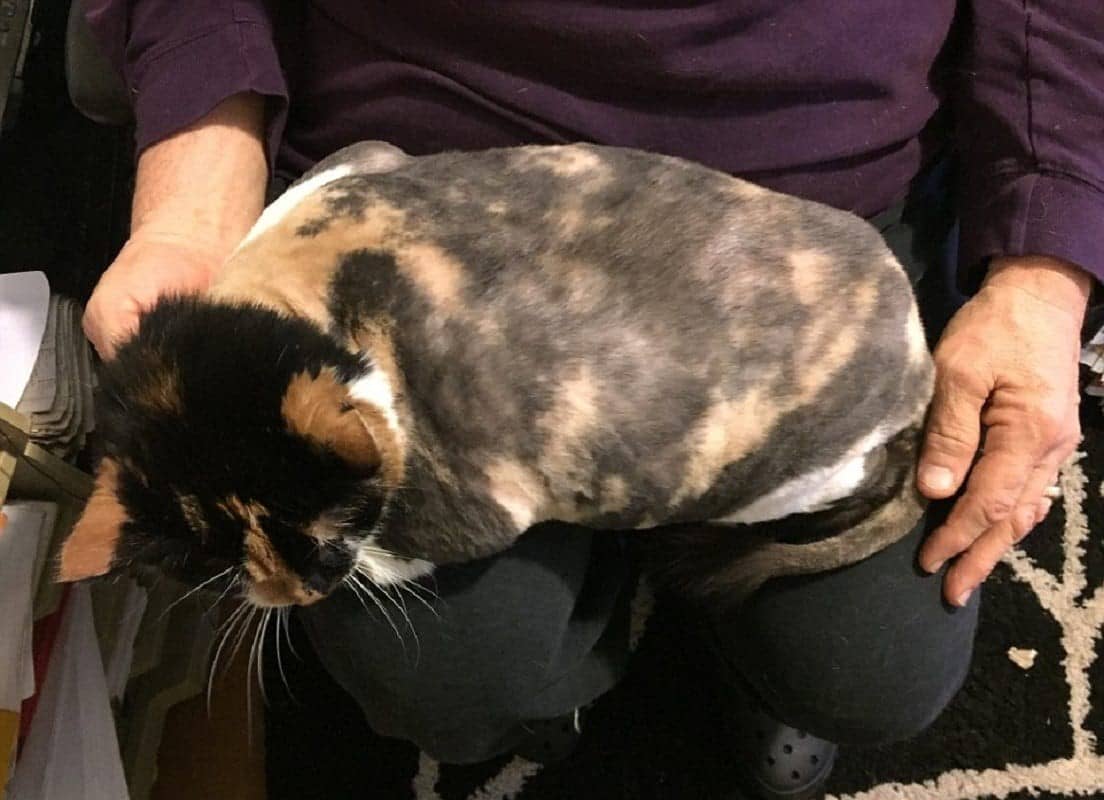
The fur was weighing up to two pounds! “Lots of furs. It had to be years of matting for it to get that long.” Hidey turned out to be not only the fattest but also one of the hairiest cat in history. Hidey had an even greater difficulty: she didn’t have a place to call home.
Two Pounds
Forever Home
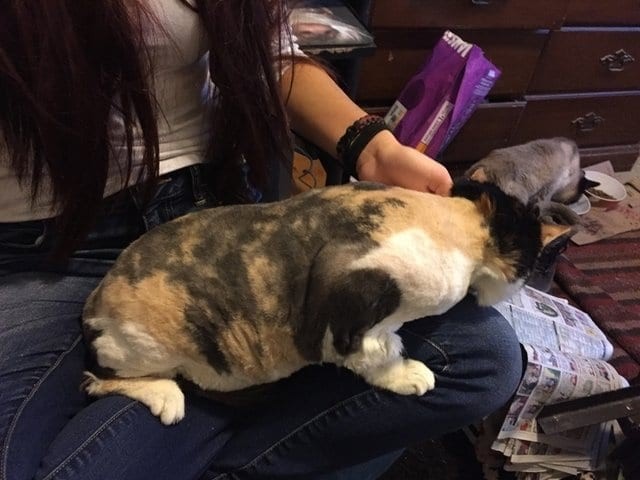
Fortunately, Paul and his wife decided to take both Hidey and Siam in after Hidey had been released from the vet hospital. The two cats have a forever home now with the Russels, and the two other cats and two dogs have instant siblings.
Forever Home
Transitioning
It takes more time for Hidey to see who she is, but without overgrown fur, she gradually transitions to life. Maybe she still doesn’t know it, but she has a chance to live a happy and healthy life! But can Hidey ever again trust people?

Transitioning
Take Time
It will take some time for her to settle down after years of neglect. “She’s been hiding under the bed for the last few days,” Russell said. “I’ve been dragging her out and holding her, and she’s starting to purr a lot.”

Take Time
Little By Little
“For the last couple of days, she’s climbed from under the bed on her own, and I’ve got a cat’s bed. So she’s starting to work her way to see more people.” “The companionship of a pet will offer many positive benefits to the elderly, but it is a great responsibility to own a pet,” said Dan Rossi, CEO of the Animal Rescue League Shelter and the Western PA Humane Society.

Little By Little
Guidance
He also has a warning as well as some clear guidance on what to do in this situation. “If a family member, friend, or neighbor owns a pet, please help them ensure that there is a support system in place if / when mental faculties begin to decline,” Dan pleads.

Guidance
Open Door Shelters
“Also, open door shelters such as the Animal Rescue League Shelter and the Western PA Humane Society do not turn any animal away unless there are other choices for the pet.” It’s going to take more time to see who Hidey is, but she’s gradually adjusting to life without pounds of overgrown fur and starting to come out of her shell.

Open Door Shelters
Run The House
“Other than being standoff, in which you are keeping her, and she’s going to purr,” Russell continues. But Jill feels there’s a lot more in store for Hidey in 2018. “She’s going to run the house in six months,” Jill says.

Run The House
A Little Trimmer
“And now she’s going to be a little trimmer.” Thank goodness someone had finally realized that Hidey was struggling under all those pounds of fur and had taken care of her professionally. Let’s hope this story helps prevent more cases of unintended animal abuse among the elderly.

A Little Trimmer
Sparklemuffin
Now, let’s take a look at some of the weirdest animals you may have never seen before! Sparklemuffin is up first. In 2015, an Australian peacock spider was discovered in the woodland forests of Wondul National Park near Brisbane. Sparklemuffin, scientifically known as maratus jactatus, was named after University of California researcher Madeline Girard, who discovered the species. These brightly colored spiders are only five millimeters long and have a unique mating dance in which male spiders raise a leg to signal females.

Sparklemuffin
Harpy Eagle
The harpy eagle is one of the most distinctive birds on the planet, with a look that resembles a cross between a cockatoo and a bird of prey. Their wingspan can exceed seven feet, carrying these 20-pound birds over the rainforests of Central and South America, where they hunt large mammals such as sloths and monkeys. Harpy eagles are endangered due to habitat loss, but this bird can be seen at The Belize Zoo, a native species sanctuary about an hour outside Belize City.

Harpy Eagle
Coatimundi
The coatimundi, a strange sight in most of the United States, is a common species in Central and South America that can occasionally be seen in the American Southwest. It takes on the role of the raccoon in the food chain there, scavenging for fruits, lizards, rodents, and eggs — as well as raiding the occasional trash can. Cotimundis can be found from Uruguay to Texas, but be warned: despite their cute and cuddly appearance, coatimundis are reportedly terrible domestic pets.

Coatimundi
Jabiru Stork
A five-foot-tall stork’s glaring, dark stare can be frightening to a weary traveler. These captivating birds can be territorial, as evidenced by an infamous incident at the Belize Zoo. After a jabiru stork tried to stab unsuspecting patrons with its 14-inch-long bill, the exhibit now includes a roof above the visitor viewing platform. Jabiru storks are found in Central and South America, where they eat small mammals, fish, and amphibians.

Jabiru Stork
Axolotl
Only a small number of lakes and canals near Mexico City are home to this amazing amphibian. Due to habitat loss, the wild axolotl population, which once numbered in the thousands and provided an important food source for the Aztecs, is believed to have dwindled to just a few individuals. Axolotls can grow to be 18 inches long and have a distinct set of external gills and the ability to regrow lost limbs completely.

Axolotl
Naked Mole Rat
Naked mole rats can be seen all over East Africa, burrowing into the dry grasslands of Ethiopia, Somalia, and Kenya. Scientists have been perplexed by the naked mole-rat for decades due to a variety of unusual biological characteristics. Naked mole rats live unusually long lives for rodents, with some living to be 32 years old. They’re also cancer-resistant and can survive for hours on end in an environment with only a trace amount of oxygen.

Naked Mole Rat
Pangolin
Pangolins are the only mammal known to have scales. Parts of Central and West Africa, India, and Southeast Asia are home to these animals. Pangolins roll up into a defensive ball when threatened by predators, protected by their armor-like keratin scales. Unfortunately, insectivores are some of the world’s most illegally traded mammals. In some parts of Asia, their scales are thought to have medicinal properties, and despite an international trade ban, wild pangolin populations have plummeted as a result of poaching.

Pangolin
Tasmanian Devil
The Tasmanian devil is the world’s biggest carnivorous marsupial. Despite their resemblance to a small dog, devils are more closely related to wallabies than canines and carry their young in pouches. However, Tasmanian devil populations have plummeted in recent years due to a naturally occurring cancer known as Devil Facial Tumor Disease. The Tasmanian Devil Unzoo, a wildlife sanctuary dedicated to rehabilitating devils and researching the disease, claims, however, that the animals are adapting to fight back.

Tasmanian Devil
Echidna
The echidna shares some of the same habitats as the Tasmanian devil, but it also has a range that extends to mainland Australia. Only two mammals, echidnas, and kangaroos, lay eggs. Despite their porcupine-like appearance, echidnas are a distant relative of the platypus, which evolved 20 to 50 million years ago from an aquatic ancestor. Echidnas hunt for ants and termites on the forest floor, using their long snouts to catch prey.

Echidna
Southern Cassowary
The cassowary is Australia’s only flightless bird, standing over six feet tall and weighing nearly 190 pounds. Cassowaries can be seen in their natural habitat in Australia’s Daintree National Park. Even though cassowaries only eat fruit, they should be approached with caution. They’ve earned the moniker “the most dangerous bird on the planet” thanks to their razor-sharp talons, which they’ll use to defend themselves from dogs and people who get too close.

Southern Cassowary
Bilby
The bilby split from the bandicoot family 20 million years ago, resulting in a marsupial that looks like a cross between a piglet, a rabbit, and a bandicoot. The bilby is now known throughout Australia as Australia’s version of the Easter Bunny. Chocolate bilbies appear on store shelves in Australia every April to raise awareness for the native animal, which has lost 80% of its population in the last 200 years.

Bilby
Alligator Gar
This terrifying fish is a relic of the dinosaur era, dating back 100 million years and reaching lengths of over eight feet. Their snouts resemble those of reptiles and contain rows of sharp teeth, as well as an adaptation that allows this fish to breathe air. Alligator gar are docile creatures that can be found peacefully swimming in freshwater rivers and lakes from the Rio Grande to the Missouri River, despite their intimidating size and weaponry.

Alligator Gar
Capybara
The world’s largest rodent can be found across many South America, grazing on grasses and aquatic plants in savannas and rainforests. Capybaras are extremely social animals that can congregate in groups of up to 100 individuals. These gentle creatures have a reputation for living in captivity for over a decade and cohabiting with other animals. However, in the wild, capybaras are less successful because they don’t live as long and are a favorite prey of jaguars, cougars, and crocodiles.

Capybara
Vampire Bat
Vampire bats, unlike other bats that eat fruits and insects, have evolved to eat blood. There are only three species, all of which can be found in the Americas, though none can be found north as the United States. Vampire bats use sound to detect sleeping animals, such as capybaras, and then use infrared sensors to find feeding hot spots on their prey before digging in with their oversized incisors and canines.

Vampire Bat
Kinkajou
The kinkajou is the only non-primate tree-dwelling mammal known. These small mammals, which grow to be about two feet long and weigh only ten pounds, can be found in forests from the Yucatan to the Amazon. Kinkajous use their prehensile tails to reach and eat fruit that is high in the forest canopy. They are most active at night and have been seen descending on rainforest resort patios like this one in Belize’s Sweet Songs Jungle Lodge.

Kinkajou
Aardwolf
Don’t be fooled by the name. Aardwolves are not related to wolves or aardvarks in any way. In Afrikaans, their name means “earth wolf,” referring to their voracious appetite for insects. Aardwolves are closely related to hyenas and are found in east and southern Africa. However, you’re more likely to find them tearing into a termite mound than a lion carcass left on the ground. This is because Aardwolves can consume up to 200,000 termites in one sitting, providing them with both protein and moisture, allowing them to thrive in some of the world’s driest environments.

Aardwolf
Pink Fairy Armadillo
Pink fairy armadillos are the tiniest of all armadillos, and they can only be found in Argentina’s grasslands and sand plains. Their pocket size makes them sought-after pets, measuring less than 11cm long with a pink shell and white silky fur. Unfortunately, agriculture and cattle ranching are destroying their natural habitat. Xenarthrans, for example, are doing everything they can to ensure the species’ survival.

Pink Fairy Armadillo
Chinese Water Deer
The Chinese water deer, which is native to the Yangtze flood plain and parts of Korea, is more closely related to a musk deer than a true deer. The males do not have antlers. Instead, they develop long canines that resemble tusks, earning the breed the terrifying moniker of “vampire deer.” If you come across one in the wild, you’re not in any danger. The tusks are mostly ornamental and are used to dig for food. They aren’t looking for your blood. Weeds, grasses, and herbs are their preferred foods.

Chinese Water Deer
Streaked Tenrec
The streaked tenrec is not a hedgehog, despite its spiked appearance. When threatened, it curls up into a ball and shoots quills into the mouth of any predator foolish enough to try to eat it, but it’s more closely related to otters and moles. Tenrecs are native to Madagascar, and streaked tenrecs can be found scratching around on the rainforest floors in Ranomafana, looking for worms and other insects to eat. Stumbling across a streaked tenrec, which is primarily nocturnal, is sure to frighten you.

Streaked Tenrec
Margay
The margay is a small wild cat that lives in Central and South America’s deciduous, tropical, subtropical, and cloud forests. It is a solitary creature that climbs through the trees, looking for rats, tree frogs, and squirrels to eat. Although the margay’s stature and spotted face resemble those of an ocelot, there are a few key differences. For starters, its tail is longer than its hind leg, whereas an ocelot is shorter. Margays are unfortunately rare, having been victims of the illegal wildlife trade in the 1990s.

Margay